
High ticket affiliate marketing is the practice of earning large commissions, typically $100 to $5,000 or more per sale, by promoting premium products or services to targeted audiences. The industry term for this model is "high ticket affiliate marketing," and it sits at the intersection of what is high ticket sales and performance-based marketing. Unlike standard affiliate programs that pay $5 to $50 per conversion, this model lets you earn meaningful income from a handful of sales rather than thousands. Niches like SaaS platforms, online business courses, and professional coaching programs are the most common sources of these commissions. If you are exploring online income opportunities, this model deserves serious attention.
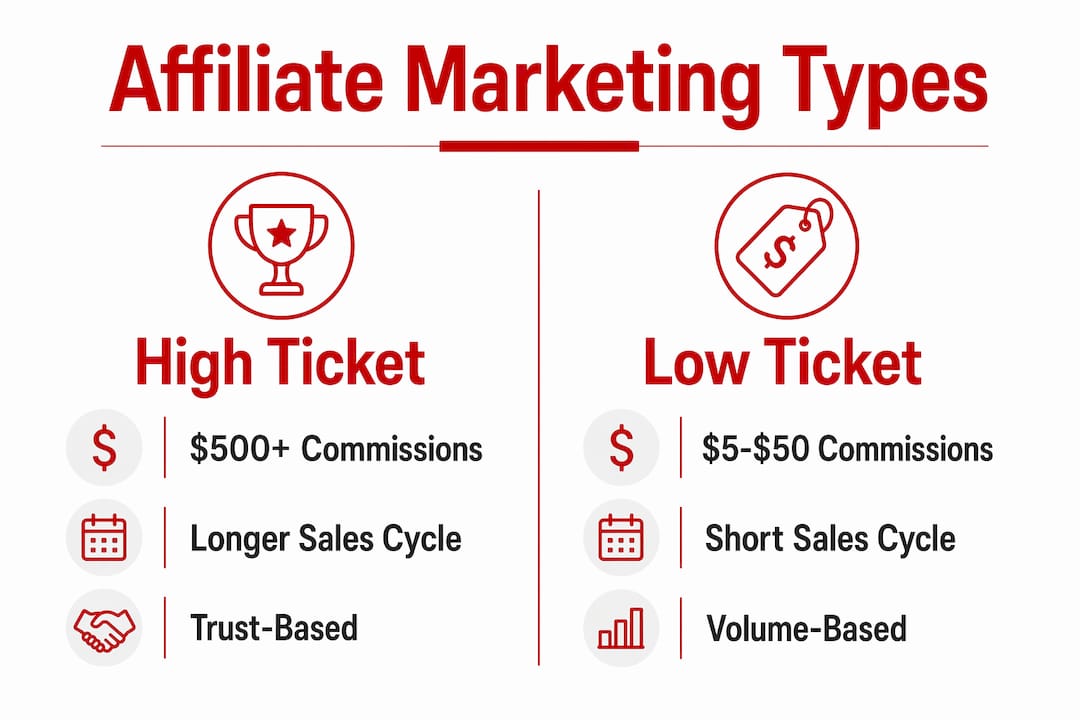
What is high ticket affiliate marketing vs. low-ticket affiliate marketing?
The structural difference between these two models is not just commission size. It is the entire way you sell, who you sell to, and how long it takes to close a deal.
High ticket affiliate marketing relies on trust-based, consultative content and longer sales cycles rather than volume and impulse buys. A low-ticket affiliate drops a link in a blog post and earns $12 when someone buys a $40 product. A high ticket affiliate spends weeks building authority, runs a webinar, and earns $1,500 when a qualified buyer enrolls in a business coaching program. The buyer psychology is completely different. High ticket buyers research carefully, compare options, and need to trust you before they spend $1,000 or more.

Refund rates also tell an important story. Products with weak delivery or oversold promises generate refund rates above 20%, which destroys your commissions retroactively. Smart affiliates evaluate the full offer ecosystem, including the sales funnel, refund policy, product delivery, and vendor reputation, not just the commission percentage.
| Factor | High ticket affiliate | Low-ticket affiliate |
|---|---|---|
| Commission per sale | $500–$5,000+ | $5–$100 |
| Sales needed for $5,000/month | 1–10 | 50–1,000 |
| Buyer decision timeline | Days to weeks | Minutes to hours |
| Refund risk | Low if offer is vetted | Moderate to high |
| Content depth required | High (reviews, webinars, guides) | Low (listicles, banners) |
The table makes the math obvious. You need far fewer conversions to hit the same income target. That efficiency is the core appeal of high ticket affiliate programs.
How much can you realistically earn in 2026?
Earnings in this model follow a clear pattern based on time invested and consistency. Part-time high ticket affiliates earn between $2,000 and $10,000 monthly after 90 days of focused effort. Full-time professionals working this model earn $15,000 to $50,000 monthly. Those numbers are real, but they are not guaranteed, and they are not fast.
The 90-day mark is significant. That is roughly when content starts ranking, trust starts building, and your first qualified leads begin converting. Before that point, you are planting seeds, not harvesting them.
Here is what separates affiliates who hit those numbers from those who quit early:
- Niche focus. Generalists struggle. Specialists who own one topic convert at higher rates.
- Consistency over volume. Publishing two deeply researched articles per week beats publishing ten thin posts.
- Realistic timelines. A typical high ticket business requires 12 to 24 months of consistent content creation to build meaningful income.
- Offer quality. Promoting a product with a 25% refund rate will erode your commissions and your reputation simultaneously.
The biggest misconception new affiliates carry is that high commissions mean fast money. They do not. They mean fewer sales needed once the machine is running. Building that machine takes time.
What does a high ticket affiliate funnel actually look like?
A high ticket affiliate funnel has five distinct stages, and each one serves a specific purpose. Understanding this structure is what separates affiliates who convert from those who just generate traffic.
1. Traffic generation. You attract buyers through SEO content, YouTube videos, paid ads, or social media. The key is targeting high-intent buying keywords rather than broad informational terms. "Best business coaching program for entrepreneurs" converts. "What is business coaching" does not.
2. Bridge page or opt-in. This is a short page that pre-sells the offer and captures the visitor's email. It sets expectations and filters out low-intent visitors before they reach the vendor's sales page. You can learn how each stage connects by studying sales funnel stages in detail.
3. Value and training delivery. This stage is where high ticket marketing separates itself completely from low-ticket. You deliver a free webinar, a mini-course, or a detailed case study that educates the buyer and positions you as a trusted advisor. High ticket sales require a trusted advisor role, not a pushy closer.
4. Expert sales mechanism. The vendor's sales page, webinar, or phone closer handles the actual conversion. Your job is to send warm, educated prospects, not cold traffic.
5. Commission earned. After the buyer purchases and the refund window closes, your commission is confirmed. For a $3,000 program at 40% commission, that is $1,200 from one sale.
Pro Tip: Add an ROI calculator or a transparent "is this right for you" guide to your bridge page. Buyer enablement assets like these move prospects from interest to confident purchase faster than any sales copy.
A well-built funnel is not complicated. It is methodical. For a deeper look at how these stages connect, the proven funnel strategy guide at Moneyfunnel covers the full architecture.
What strategies actually work when starting out?
The affiliates who succeed in high ticket marketing share a set of behaviors that most beginners skip entirely.
Focus on buyer intent, not traffic volume. A page ranking for "best high ticket affiliate programs for beginners" attracts someone ready to act. A page ranking for "what is affiliate marketing" attracts someone who is just browsing. Niche targeting with high-intent keywords converts better than large generalized audiences every time.
Build authority before you build an audience. Sophisticated buyers can detect thin content immediately. They are spending $1,000 or more, and they will read your review carefully, check your credentials, and look for red flags. Publish detailed case studies, transparent comparisons, and honest implementation guides. That content builds the trust that closes sales.
Avoid these common mistakes:
- Chasing the highest commission without vetting the product or its refund rate
- Promoting five different offers at once instead of mastering one
- Copying competitor content instead of sharing genuine experience
- Expecting results in 30 days and quitting before the 90-day mark
Do these instead:
- Pick one niche and one flagship offer to start
- Create content that answers the exact questions buyers ask before purchasing
- Use webinar funnels to deliver value and warm up prospects before the sales page
- Track your conversion data from day one so you know what is working
Pro Tip: Before promoting any high ticket offer, request access to the vendor's sales funnel and watch the entire sequence yourself. If you would not buy it, do not promote it.
How to start your high ticket affiliate marketing journey
Starting this business does not require a large budget or technical expertise. It requires a clear plan and the discipline to follow it.
-
Choose your niche. Pick a market where buyers spend significant money to solve real problems. Business education, financial planning tools, health and wellness coaching, and SaaS software are proven high ticket affiliate niches.
-
Find a quality program. Look for programs offering $500 or more per sale, a refund rate below 10%, and a proven sales funnel. Networks like ClickBank, ShareASale, and direct vendor programs all host high ticket offers.
-
Set up your core assets. You need a domain, reliable hosting, and an SEO tool like Ahrefs or Semrush to research keywords. A simple WordPress site or a funnel builder like ClickFunnels handles the technical side.
-
Create your content plan. Map out 12 pieces of content targeting buying-intent keywords in your niche. Write detailed reviews, comparisons, and implementation guides. Prioritize depth over frequency.
-
Build your email list from day one. Every visitor who leaves without subscribing is a lost opportunity. An email sequence that delivers value over 7 to 14 days converts cold readers into warm buyers.
-
Execute consistently for 90 days. Publish, promote, and refine. Do not change your offer or niche before the 90-day mark. Results require time to compound.
For a structured approach to building the funnel itself, the funnel creation guide at Moneyfunnel walks through each step in plain language.
Key takeaways
High ticket affiliate marketing is a long-term business model that rewards niche focus, buyer trust, and consistent content creation over volume and shortcuts.
| Point | Details |
|---|---|
| Commission range | High ticket commissions run $100 to $5,000+ per sale, requiring far fewer conversions than low-ticket programs. |
| Realistic earnings timeline | Part-time affiliates typically reach $2,000–$10,000 monthly after 90 days of focused, consistent effort. |
| Funnel structure matters | A five-stage funnel covering traffic, bridge page, value delivery, sales mechanism, and commission is the standard model. |
| Offer vetting is non-negotiable | Evaluate refund rates, product delivery, and the vendor's sales funnel before promoting any high ticket offer. |
| Long-term commitment required | Building meaningful income takes 12 to 24 months of consistent content creation targeting buying-intent keywords. |
Why most people get this model wrong from day one
I have watched hundreds of people enter high ticket affiliate marketing with the wrong mental model. They treat it like a lottery ticket rather than a business. That single mistake explains most of the failure stories you read online.
The affiliates I have seen succeed share one trait: they think like trusted advisors, not salespeople. They ask "does this product actually solve my audience's problem?" before they ask "how much does it pay?" That order of priorities sounds obvious, but most newcomers chase commissions first and wonder why their refund rates are destroying their earnings six months later.
The other pattern I notice is an obsession with audience size. Follower counts do not close high ticket sales. Relationships and credibility do. I have seen affiliates with 500 email subscribers outperform accounts with 50,000 followers because their list trusted them completely. Sophisticated buyers are not impressed by numbers. They are impressed by expertise and honesty.
My honest advice: commit to one niche, one offer, and one content format for at least six months before drawing any conclusions. The compounding effect of consistent, quality content is real, but it is invisible for the first 90 days. Most people quit right before it kicks in.
— Mike
Ready to build your high ticket funnel with real guidance?
Understanding the model is the first step. Building it correctly is where most people get stuck without support.
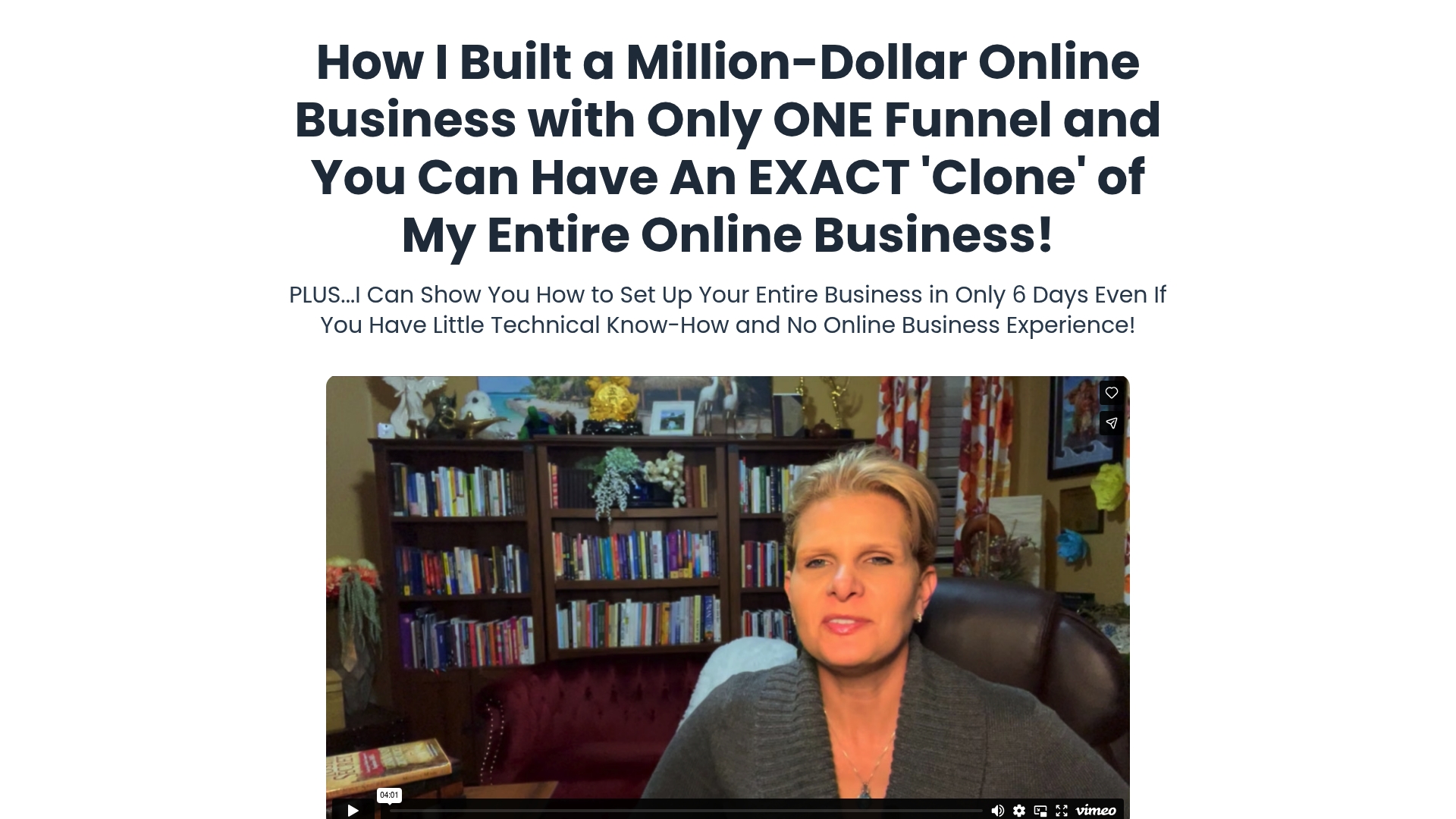
Moneyfunnel's 6-Day Money Funnel Mentorship walks you through the exact funnel system used to generate $10 million from a single offer. Over six days, you get step-by-step instruction on setting up your funnel, choosing the right high ticket offer, and driving qualified traffic, all inside a group mentorship format with direct access to guidance. The program is designed for beginners with no technical background. Spots are limited by design to keep the mentorship personal and effective. If you are serious about building a real online income, this is the structured starting point that removes the guesswork.
FAQ
What is high ticket affiliate marketing in simple terms?
High ticket affiliate marketing is promoting premium products or services and earning commissions of $100 to $5,000 or more per sale. It requires fewer conversions than low-ticket marketing to generate meaningful income.
What are the best niches for high ticket affiliate programs?
Business education, SaaS software, financial coaching, and health and wellness programs are the top high ticket affiliate niches. These markets attract buyers willing to invest significantly to solve real problems.
How long does it take to earn money with high ticket affiliate marketing?
Part-time affiliates typically see $2,000 to $10,000 monthly after 90 days of consistent effort. Building a full-time income generally takes 12 to 24 months of focused content creation.
Do I need a large audience to succeed in high ticket marketing?
No. A small, highly targeted audience that trusts your recommendations converts better than a large general audience. Niche authority and buyer intent matter far more than follower counts.
What should I look for in a high ticket affiliate program?
Look for commissions of $500 or more per sale, a refund rate below 10%, a proven sales funnel, and a vendor with a strong reputation. Evaluating the full offer ecosystem protects your earnings over the long term.