
Most aspiring entrepreneurs assume building a sales funnel requires coding skills, a big budget, or weeks of setup. None of that is true. The steps to create funnels that actually convert are simpler than the marketing industry wants you to believe, and you can have a working version live in under 48 hours. This guide breaks the entire funnel design process into clear, actionable stages so you can stop overthinking and start building something that moves real people toward a real purchase.
Table of Contents
- How to choose the right funnel framework: Key criteria
- Step 1: Create your offer and lead magnet
- Step 2: Build your landing page and capture form
- Step 3: Set up your email nurture sequence
- Step 4: Drive traffic and track results efficiently
- Comparing funnel approaches: Quick-start vs. perfection
- The overlooked truth about funnel complexity and speed
- Accelerate your funnel success with expert mentorship
- Frequently asked questions
How to choose the right funnel framework: Key criteria
To build your funnel effectively, start by defining the criteria that guide every decision you make. Skipping this step is the most common reason new entrepreneurs end up with a funnel that looks polished but converts nobody.
Before you write a single word of copy or pick a tool, answer three questions:
- What is this funnel's one job? Lead capture, product sales, and webinar registration are all different goals that require different structures. A funnel trying to do all three does none of them well.
- Who is the person you are trying to reach? Not a demographic. A specific person with a specific frustration. The more precisely you picture them, the more targeted your messaging will be throughout every funnel stage.
- What is the simplest version that works? Marketing experts emphasize that funnels should filter for genuinely interested prospects and remove guesswork. That means the clearest path wins, not the most elaborate one.
One more thing to kill early: the myth that funnels are technical. You do not need to understand APIs or code. You need a clear offer, a page that captures attention, and an email sequence that follows up. That is it.
Step 1: Create your offer and lead magnet
With your criteria set, the first concrete step is to create your irresistible offer. This is the entry point of your funnel, and it determines whether a stranger gives you their email address or leaves forever.
The best effective lead magnets for beginners are not lengthy ebooks. They are fast-to-consume, immediately useful assets tied to a single specific problem. Think:
- A one-page checklist that solves a problem your audience faces this week
- A fill-in-the-blank template that saves them 30 minutes of work
- A short calculator or quiz that gives them a personalized result
The goal is not to impress them. The goal is to be useful enough that sharing their email feels like a fair trade. Offers and lead magnets should match buyer intent and guide prospects toward a single next step, not a menu of options.
Pro Tip: Name your lead magnet with a measurable outcome in the title. "5-Minute Funnel Checklist" converts better than "Funnel Resources Guide" because it tells the reader exactly what they get and how fast they get it.
Step 2: Build your landing page and capture form
Once your offer is crafted, the next step is to build the landing page that converts visitors into leads. This page has one job: get the click. Every element on it should support that single goal.
Here is what a high-converting landing page at the top of the funnel actually needs:
- A headline that communicates a specific benefit, not a clever tagline. "Get the free checklist that maps your first funnel in 20 minutes" beats "Welcome to my world" every single time.
- A form with one field. At the top of the funnel, ask for an email address only. Every additional field you add drops conversions. Landing page design tips confirm that minimal form fields reduce friction and increase the percentage of visitors who follow through.
- A CTA button with benefit-focused text. "Send me the checklist" outperforms "Submit" because it reflects what the visitor actually wants.
- Mobile testing. Over 60% of web traffic happens on phones. If your page is clunky on mobile, you are losing more than half your potential leads before they ever see your offer.
Benefit-driven copy near CTAs and minimal form fields remain the two most impactful variables for landing page conversion rates.
Pro Tip: Use a page-building tool that shows you a live mobile preview as you build. What looks clean on a desktop often breaks on a phone screen without real-time checking.

Step 3: Set up your email nurture sequence
After capturing leads, nurturing them through email is your next crucial funnel step. This sequence is where most of the real trust-building happens, and most beginners either skip it entirely or write emails so vague they generate zero response.
Build your sequence in this order:
- Welcome email (Day 0): Deliver the lead magnet immediately. Introduce yourself in one short paragraph. Set expectations for what is coming.
- Value email (Day 3): Share one genuinely useful tip related to your topic. No pitch. Pure value.
- Story email (Day 6): Tell a short story about a problem you or a client faced and how it was solved. This is where trust forms.
- Soft pitch email (Day 9): Mention your product or service for the first time. Frame it as a natural extension of the value you have already delivered.
- Follow-up email (Day 12): Address the most common objection your audience has. Answer it honestly.
B2B nurture sequences recommend 5-8 emails over 4-8 weeks with engagement-based branching so leads who buy early stop receiving sales content they no longer need.
The branching piece matters more than beginners realize. If someone clicks your sales link in email 4 and buys, they should exit the pitch sequence immediately. Sending them more sales emails after they have already converted destroys trust fast. Personalization and conditional content during the first 30 days are critical to reducing churn and keeping engagement high.
Step 4: Drive traffic and track results efficiently
With your funnel live and nurturing in place, driving and tracking qualified traffic becomes essential. A funnel with no visitors is just a set of pretty pages.
Choose traffic channels based on where your specific audience actually spends time, not where you feel comfortable. Paid ads bring fast data. SEO brings compounding returns over months. Social media works when you already have an engaged audience. Most beginners get the fastest results from a small paid traffic test because it gives you real conversion data within days instead of waiting for organic growth.
Whatever traffic source you use, you need UTM parameters set up from day one. UTM tags are short pieces of text you add to the end of a URL to tell your analytics tool exactly where a visitor came from.
| UTM Parameter | Purpose | Example |
|---|---|---|
| utm_source | Identifies the traffic origin | |
| utm_medium | Identifies the channel type | paid_social |
| utm_campaign | Identifies the specific campaign | funnel_launch_2026 |
Three core UTM parameters in lowercase with underscores are required for Google Analytics 4 to avoid data fragmentation across your reports. One critical mistake to avoid: tagging internal links with UTM parameters corrupts session attribution and makes your source data unreliable.
Pro Tip: Create a simple spreadsheet to store all your UTM links before launch. One mismatched uppercase letter in a UTM tag creates a separate entry in your analytics, splitting your data and making results look worse than they are.
Comparing funnel approaches: Quick-start vs. perfection
Understanding how fast to launch your funnel helps you act decisively and learn quickly. There is a real tension between wanting to build something polished and needing real-world data to know what actually works.
| Funnel Type | Build Time | Data Available | Risk |
|---|---|---|---|
| Quick-start | 24 to 48 hours | Within days | Low investment, fast feedback |
| Comprehensive | 8 to 10+ hours | Weeks to months | High investment before validation |
Launching a basic funnel within 48 hours provides real-world data for optimization, consistently outperforming complex funnels that fail because they were never tested against actual users.
The pattern is consistent: entrepreneurs who launch a simple lead magnet, a single landing page, and a 5-email sequence learn more in two weeks than they would in two months of planning a perfect funnel. Iteration based on real behavior beats theory every time.
Marketing funnels and sales pipelines serve different roles: marketing educates leads, while sales advances qualified opportunities. Confusing the two leads to misaligned teams and wasted effort.
If you want to see what a fast, structured funnel build looks like with expert guidance, the quick-start funnel mentorship at Money Funnel walks you through the entire process in six focused days.
The overlooked truth about funnel complexity and speed
Here is the thing nobody in the funnel-building space says loudly enough: complexity is a comfort mechanism, not a strategy.
When you spend weeks designing a 12-step funnel with elaborate segmentation rules and conditional logic before you have a single subscriber, you are not being thorough. You are procrastinating with extra steps. The funnel that gets built and launched, even imperfectly, will always outperform the one still sitting in a planning document.
The data backs this up. Pipeline stages built on confirmed buyer actions, not internal assumptions about where a lead "should" be, produce more accurate forecasting and better alignment between your marketing and sales activities. In plain language: stop deciding where leads are based on how long they have been in your sequence. Watch what they actually do. Clicks, replies, and purchases tell you more than time-based guesses.
There is also a team alignment issue that most solo entrepreneurs overlook because they think it only applies to bigger organizations. Even when you are a one-person operation, you are playing both the marketing role (educating and qualifying leads) and the sales role (converting confirmed interest into revenue). When those two roles blur, you pitch too early to cold leads and lose them, or you educate warm leads forever and never ask for the sale.
Define the line clearly: marketing handles everyone until they demonstrate buying intent. Sales handles anyone who has shown a specific action, such as clicking a pricing link, requesting a demo, or replying to ask about working with you. That single distinction will make your funnel dramatically more effective without adding a single new tool or step.
Accelerate your funnel success with expert mentorship
Building a funnel step by step is genuinely achievable on your own. But the gap between "I built something" and "I built something that converts" is often just a few targeted adjustments that take experience to spot.
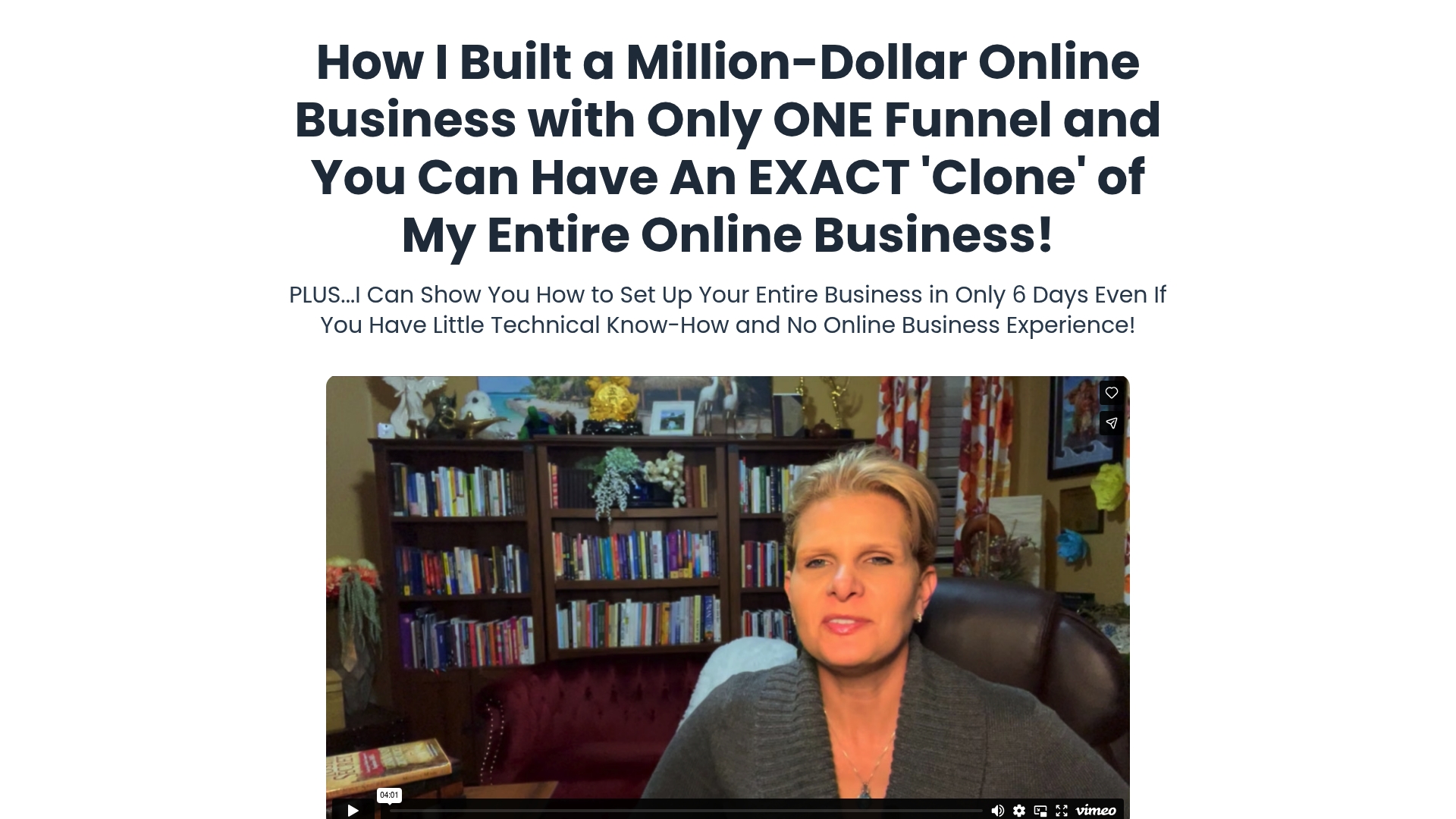
The 6-Day Money Funnel Mentorship is designed specifically for aspiring entrepreneurs who want to launch their first funnel fast, without a tech background or a team behind them. Over six focused days, you work through every funnel creation step covered in this guide, with personalized coaching, ready-to-use templates, and direct feedback on your actual pages and emails. It is built for speed and clarity, not theory. If you are serious about putting your funnel live and learning what works from real data, this is the fastest path to get there.
Frequently asked questions
How long does it take to create a basic sales funnel?
A foundational sales funnel can be built in 8 to 10 hours, while a quick-start version with a simple offer, landing page, and 3-5 email sequence can go live within 48 hours.
What is the ideal number of emails in a nurture sequence?
Best practices recommend 5 to 8 emails sent over 4 to 8 weeks with 3 to 5 day gaps, branching based on engagement so leads who convert early stop receiving irrelevant sales content.
How should UTM parameters be used in tracking funnel traffic?
Use the three core parameters (utm_source, utm_medium, utm_campaign) in lowercase with underscores for consistency, and never apply UTM tags to internal navigation links because doing so corrupts your session attribution data.
What is the difference between a marketing funnel and a sales pipeline?
A marketing funnel educates leads through content and nurture sequences, while a sales pipeline tracks qualified opportunities based on confirmed buyer actions moving toward a purchase decision.