
Online lead generation is the process of attracting prospects and converting them into contacts by offering valuable resources across multiple digital channels. Mastering how to generate leads online separates businesses that grow predictably from those that chase random traffic with nothing to show for it. The difference between a full pipeline and an empty one comes down to three things: the right offer, the right channel, and a nurturing system that turns cold contacts into buyers. This guide covers all three, with specific tools, timelines, and workflows you can put to work immediately.
What do you need before starting online lead generation?
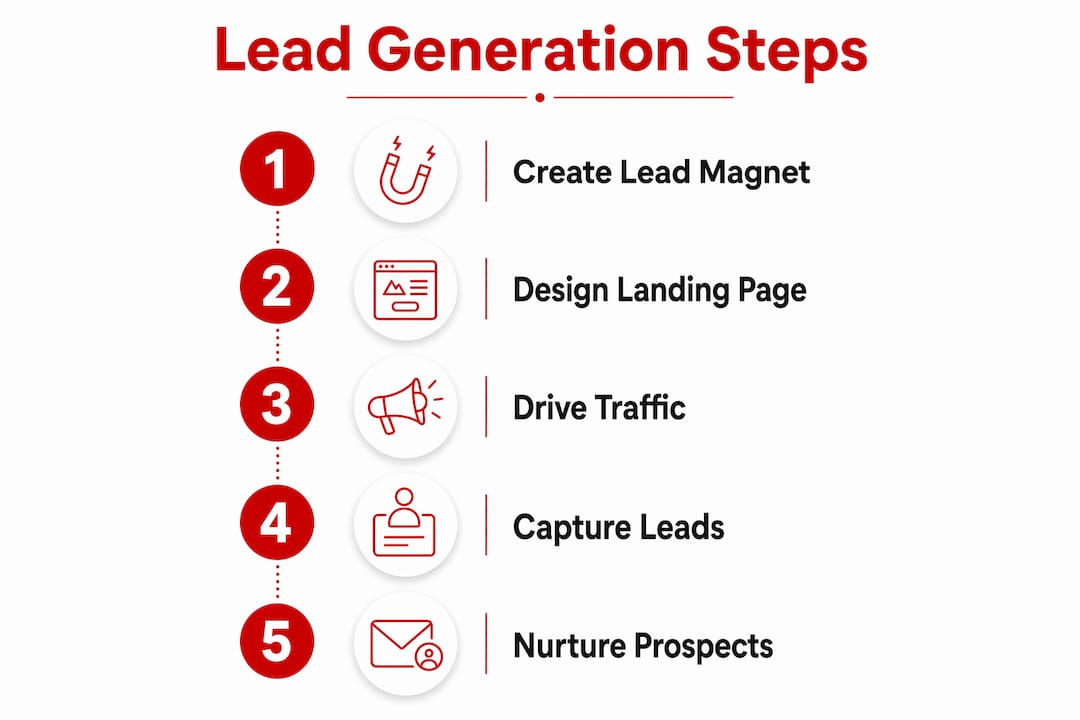
The foundation of any lead generation system is a lead magnet, a landing page, and a CRM. A lead magnet is a free resource you offer in exchange for contact information. Common formats include ebooks, checklists, video courses, and free templates. Your landing page exists for one purpose: to convert visitors into leads. Your CRM, whether HubSpot, ActiveCampaign, or a simpler tool, stores those contacts and triggers follow-up sequences.

Multi-channel traffic is the second requirement. Businesses that combine 3–4 complementary strategies such as content marketing, referral programs, and targeted outreach see more resilient pipeline growth than those relying on a single source. Depending on one channel is a pipeline risk, not a strategy.
Lead scoring is the third piece most beginners skip. Scoring assigns points to leads based on behavior and fit, so your sales effort goes to the contacts most likely to buy. Without scoring, you waste time on cold contacts while hot prospects go untouched.
- Lead magnet: A free, high-value resource that solves one specific problem
- Landing page: A focused page with one call to action and no distractions
- CRM: A system to store, tag, and follow up with every contact automatically
- Traffic sources: At least two to three channels feeding your landing page
- Lead scoring model: A point system to separate hot, warm, and cold leads
Pro Tip: Ask for only a first name and email address on your first opt-in form. The micro-yes approach of requesting minimal information first increases landing page conversions significantly. You can collect more data later once trust is established.
How to create lead magnets that attract qualified prospects
A lead magnet works when it solves the single most pressing problem your ideal prospect faces right now. Ebooks and whitepapers work well for B2B audiences who want depth. Checklists and templates work for people who want speed. Video courses work for audiences who prefer learning by watching. The format matters less than the specificity of the problem you solve.
The process for building a strong lead magnet has four steps:
- Identify the pain point. Survey your existing customers or read reviews in your niche. The exact language people use to describe their problem is the language your lead magnet title should mirror.
- Choose the right format. Match format to your audience's preference and your own production speed. A one-page checklist you publish this week beats a 40-page ebook you never finish.
- Deliver immediate value. The lead magnet must produce a result or insight the moment someone consumes it. Value-driven educational content attracts better leads and builds trust faster than promotional material.
- Promote across channels. Publish your lead magnet landing page URL in blog posts, social media profiles, email signatures, and paid ads. Organic promotion through SEO and social media builds long-term traffic. Paid ads on Google or Meta produce faster results but require budget.
The biggest mistake with lead magnets is making them too broad. "10 Tips for Business Growth" attracts everyone and converts no one. "The 3-Step Checklist for Freelancers to Land Their First $5,000 Client" speaks directly to one person with one problem. Specificity is what makes a lead magnet worth downloading.
Which online channels drive the most qualified traffic?
SEO is the highest-quality traffic source for most businesses because it attracts people actively searching for solutions. The tradeoff is time. SEO-driven lead generation typically takes 3–6 months to show measurable results, which means you need other channels running in parallel while your content builds authority.
Building topic clusters accelerates that timeline. A pillar page covering your core topic, supported by linked articles on related subtopics, compounds SEO authority over time and reduces dependence on paid ads. Think of it as a long-term asset that keeps generating leads without ongoing spend.
| Channel | Speed | Cost | Best for |
|---|---|---|---|
| SEO / Content | Slow (3–6 months) | Low | Long-term, compounding traffic |
| Google Ads | Fast | High | Bottom-of-funnel, high-intent buyers |
| Social media | Medium | Low to medium | Distribution and brand awareness |
| Referral programs | Medium | Low | Warm leads from trusted sources |
| Webinars | Fast | Medium | High-engagement, qualified prospects |
Social media deserves a specific note. Social media works best as a distribution channel for content that drives traffic back to your domain, not as a standalone lead source. Posting on LinkedIn or Instagram builds visibility, but the lead capture happens on your landing page, not inside the platform.
Referral programs and webinars round out a multi-channel approach. Referrals bring warm leads who already trust you because a peer recommended you. Webinars attract engaged prospects willing to invest an hour of their time, which signals genuine interest. A webinar funnel converts that engagement into opt-ins and sales conversations efficiently.
How do you qualify and nurture leads into customers?
Lead scoring separates the contacts worth calling today from those who need more time. The point-based scoring system works like this: leads scoring 7 or more points are hot and ready for a sales call; 4–6 points are warm and need email nurturing; below 4 points are cold and should be deferred. Points come from actions like opening emails, visiting your pricing page, downloading multiple resources, or matching your ideal customer profile.
Once you score a lead, the nurturing sequence takes over. A structured 7-step email workflow over 21 days is the proven framework for moving leads from cold to ready. Here is how those steps break down:
- Day 1: Welcome email. Deliver the lead magnet and set expectations for what comes next.
- Day 3: Value email. Share one insight or tip that solves a related problem. No pitch.
- Day 5: Story email. Tell a short story about a transformation your product or service enabled.
- Day 8: Education email. Go deeper on the core problem your lead magnet addressed.
- Day 12: Case study email. Show a real result from a real customer. Specifics build credibility.
- Day 17: Objection email. Address the top two or three reasons people hesitate to buy.
- Day 21: Offer email. Make a clear, direct offer with a deadline or limited availability.
Behavioral signals and buying intent should adjust this sequence dynamically. If a lead clicks the offer link on day 8, move them to a sales sequence immediately. If they open every email but never click, add a re-engagement step before the final offer.
Pro Tip: Apply the micro-yes principle inside your email sequence too. Ask for a small commitment before a big one. "Reply with your biggest challenge" before "Book a call" warms the relationship and dramatically increases the response rate on your sales ask.
Understanding sales funnel stages helps you map each email to the right moment in the buyer's decision process, so your messages land at the right time with the right message.
Common mistakes that kill your lead generation results
Most lead generation systems fail for predictable reasons. Knowing the pitfalls in advance saves months of wasted effort.
- Asking for too much information upfront. A form with six fields kills conversions. Experienced marketers request minimal info to build a relationship before asking for deeper commitment. Start with name and email only.
- Relying on a single traffic channel. If your only source is Facebook Ads and the platform changes its algorithm or bans your account, your pipeline collapses overnight. Diversifying lead generation strategies protects pipeline stability.
- Tracking traffic instead of leads. High page views mean nothing if no one opts in. Tracking which queries drive actual conversions, not just traffic, is what improves your content ROI over time.
- Using aggressive email collection tactics. Pop-ups that block content, fake countdown timers, and deceptive opt-in copy attract low-quality leads who unsubscribe immediately. Quality beats quantity every time.
- Never adjusting the system. Lead generation is not a set-and-forget activity. Review your opt-in rates, email open rates, and conversion rates monthly. Small adjustments compound into major improvements over a quarter.
The fix for all of these is the same: measure what matters, test one variable at a time, and build on what works. Attracting online customers consistently requires iteration, not perfection on the first attempt.
Key Takeaways
Generating leads online requires a complete system: a compelling lead magnet, multi-channel traffic, a scoring model, and a structured nurturing sequence that moves contacts from cold to ready.
| Point | Details |
|---|---|
| Build the foundation first | Set up a lead magnet, landing page, and CRM before driving any traffic. |
| Use multiple traffic channels | Combine SEO, paid ads, and social distribution to protect pipeline stability. |
| Score every lead | Assign points based on behavior to focus sales effort on the highest-intent contacts. |
| Nurture with a 21-day sequence | A 7-step email workflow over 21 days moves leads from cold to conversion-ready. |
| Track conversions, not just traffic | Measure which channels and content pieces produce actual leads, not just page views. |
What I've learned about building lead generation systems that last
Most people treat lead generation like a campaign. They run ads for a month, get some leads, and then wonder why the pipeline dries up when the budget stops. The businesses that grow consistently treat it like infrastructure.
The single biggest shift I've seen is when someone stops chasing interruption-based tactics and starts building content that attracts people already looking for a solution. Those leads convert faster, complain less, and refer more. The math is simple: a person who finds you while searching for an answer is already halfway sold before they ever read your offer.
The compounding effect is real but slow. Your first three months of SEO content will feel like shouting into a void. By month six, you start seeing consistent opt-ins. By month twelve, you have an asset that generates leads without daily effort. Most people quit at month two, which is exactly why the ones who stay consistent win.
Start with one lead magnet, one landing page, and one traffic source. Measure it for 30 days. Then add a second channel. Scaling a system that works is far easier than fixing a complicated system that doesn't.
— Mike
The Moneyfunnel mentorship that puts this into practice
Learning the strategy is one thing. Executing it without wasting months on trial and error is another.

Moneyfunnel's 6-Day Money Funnel Mentorship walks you through building a complete lead generation and sales funnel system in six days, with direct group mentorship guiding each step. The program is built around the same funnel principles covered in this article, applied to a real business setup with hands-on support. If you want a faster path from strategy to a working system, the mentorship gives you the structure and accountability to get there. Spots are limited, so check current availability at Moneyfunnel before the next cohort fills.
FAQ
What is online lead generation?
Online lead generation is the process of attracting potential customers through digital channels and capturing their contact information using a valuable offer. The goal is to build a list of qualified prospects you can nurture into paying customers.
How long does SEO take to generate leads?
SEO-driven lead generation typically takes 3–6 months to produce measurable results. Consistent content publishing and topic cluster building accelerate that timeline over time.
What is a lead magnet?
A lead magnet is a free resource, such as an ebook, checklist, or video course, offered in exchange for a prospect's contact information. The most effective lead magnets solve one specific problem for a clearly defined audience.
How does lead scoring work?
Lead scoring assigns points to contacts based on their behavior and profile fit. Leads scoring 7 or more points are ready for a sales conversation; those scoring 4–6 need more nurturing; below 4 points indicates a cold lead not yet ready to buy.
How many lead generation channels should I use?
Businesses that combine 3–4 complementary channels, such as SEO, paid ads, referral programs, and social media distribution, see more stable pipeline growth than those relying on a single source.