
Entrepreneurship step by step is a structured process of moving from a raw idea to a profitable online business through sequential, testable actions. Nearly 35 million small businesses operate in the US today, collectively employing close to half the private workforce. That scale proves the opportunity is real, not theoretical. The most realistic path follows a 12–18 month transition timeline, starting with idea validation while you keep your current income. Skipping steps is where most beginners fail. This guide covers every phase, from validating your idea to building your first sales funnel, so you can build with confidence and clarity.
How do you validate your business idea before quitting your job?
Validation is the single most important step in any starting a business guide, and most aspiring entrepreneurs skip it entirely. The goal is to confirm that real people will pay for your solution before you invest serious time or money.
Keep your day job for the first 60–90 days of the validation phase. This is not timidity. It is the financially sound move. Saving one year of living expenses and securing at least three paying customers before going full-time dramatically reduces your failure risk.
The most effective validation tactics are:
- Customer interviews: Talk to 10–20 potential customers. Ask about past failed solutions, not hypothetical product usage. "What have you already tried?" tells you far more than "Would you buy this?"
- Landing page test: Build a simple page describing your offer and drive traffic to it through paid ads or social posts. Measure email signups or pre-orders, not compliments.
- Concierge MVP: Manually deliver your service to a small group of paying customers before building any technology. This tests real demand with zero product cost.
- Warm outreach: Email 20 people in your existing network who fit your target customer profile. A personal ask converts far better than cold traffic at this stage.
Pro Tip: Frame every customer interview around their past behavior, not their future intentions. People predict their own behavior poorly. Past actions are far more reliable signals.
Avoid building an elaborate product before you have validated demand. The most common and costly mistake in entrepreneurship for beginners is spending months on a product that nobody wants to buy.

What essential skills and mindset should you develop as an aspiring entrepreneur?
Resilience, adaptability, and financial literacy matter more to early founder survival than formal education or startup capital. This is one of the most counterintuitive truths in entrepreneurship, and it holds up across business types.
Skill stacking is the practical framework here. You do not need to master everything. You need enough competence across three areas:
- Domain knowledge: Deep understanding of the problem you are solving and the market you are entering.
- Financial literacy: The ability to read a basic profit and loss statement, understand cash flow, and make pricing decisions without guessing.
- Storytelling and writing: The skill to clearly explain your value to a customer, an investor, or a partner in plain language.
"The common denominator across every type of entrepreneur, from solo creators to e-commerce operators, is the mindset to see problems as business opportunities."
The "quit and figure it out" myth is one of the most damaging ideas in entrepreneurship culture. Approaching entrepreneurship as a validated side hustle first, then scaling gradually, produces far better outcomes than dramatic exits. Building your network before and during launch also pays compounding returns. The people who become your first customers, referral sources, and advisors are almost always people you already know or people one introduction away.
Soft skills like patience and the ability to absorb early setbacks without quitting are not personality traits you either have or lack. They are habits you build through deliberate practice and honest self-assessment. Pair these with online business success mindsets and you have a foundation that holds up under pressure.
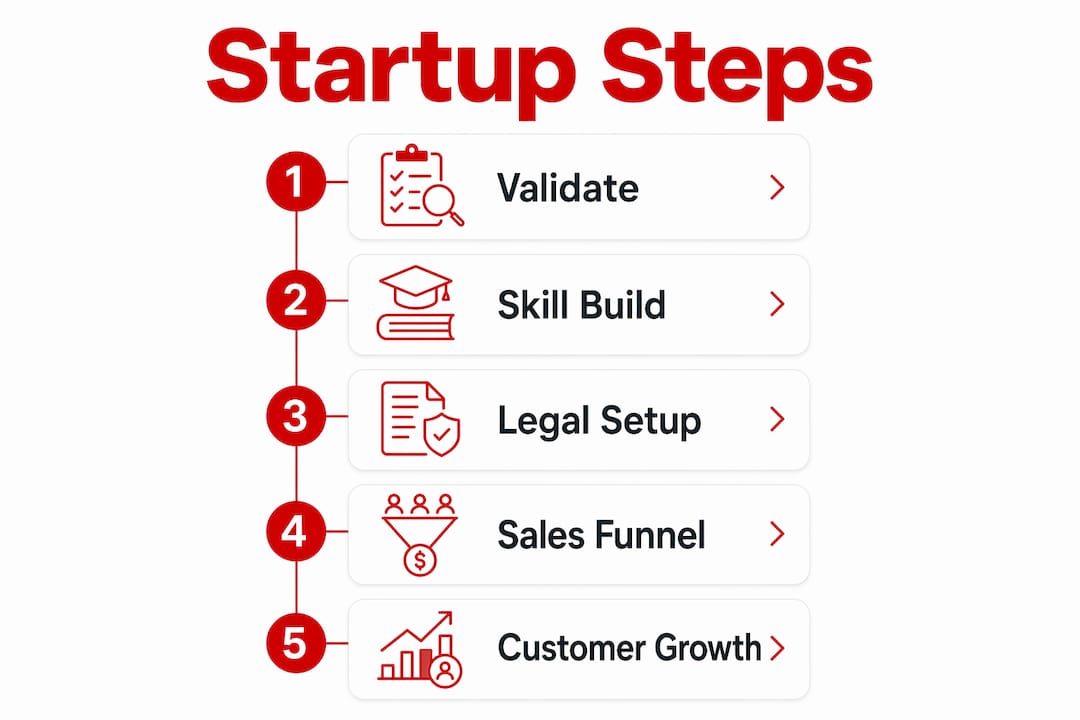
What are the key legal and financial steps in starting your online business?
Legal and financial setup is not glamorous, but skipping it creates expensive problems later. These steps form the foundation of your business startup checklist.
The required steps, in order, are:
- Choose a legal structure. An LLC offers liability protection with simpler tax treatment. A sole proprietorship is faster to set up but leaves your personal assets exposed. A corporation suits businesses planning to raise investment.
- Obtain an Employer Identification Number (EIN). The IRS requires an EIN for businesses with employees and most banks require one to open a business account. You can apply for free at IRS.gov in minutes.
- Register with your state and local government. Registration requirements vary widely by state. Check your state's Secretary of State website for the specific filings required in your jurisdiction.
- Open a dedicated business bank account. Mixing personal and business finances is the fastest way to create accounting chaos and lose legal liability protection.
- Set up accounting software. Tools like QuickBooks or Wave give you real-time visibility into revenue, expenses, and profit margins from day one.
- Purchase business insurance. General liability coverage protects you from common risks. Depending on your business type, you may also need professional liability or product liability coverage.
| Legal step | Why it matters |
|---|---|
| Choose business structure | Determines personal liability and tax treatment |
| Obtain EIN | Required for banking, hiring, and federal taxes |
| State registration | Legal requirement to operate in most jurisdictions |
| Business bank account | Separates finances and protects liability status |
| Accounting software | Tracks cash flow and simplifies tax filing |
A living business plan helps you navigate these decisions as your business grows. Treat it as a working document you update quarterly, not a one-time document you file and forget.
How do you build your first sales funnel and acquire your initial customers online?
A sales funnel is the path a potential customer takes from first hearing about you to making a purchase. Building one does not require technical expertise. It requires clarity about who you serve and what problem you solve.
Follow this sequence to get your first 10 paying customers:
- Define your offer clearly. Write one sentence describing who you help, what you help them do, and what result they get. Vague offers produce zero sales.
- Create a simple lead magnet. A free checklist, short video, or PDF that solves one specific problem builds your email list and demonstrates your expertise.
- Build a two-step funnel. A landing page captures email addresses. An automated follow-up email sequence delivers value and presents your paid offer. This is the core of any proven sales funnel strategy.
- Drive traffic through warm outreach first. Email your existing contacts, post in communities you already belong to, and ask satisfied customers for referrals before spending on ads.
- Track your funnel metrics weekly. Monitor opt-in rate, email open rate, and conversion rate. If your opt-in rate is below 20%, your landing page headline needs work. If your conversion rate is near zero, your offer or pricing needs adjustment.
Pro Tip: Your first 10 customers are your research lab. Ask every single one why they bought, what almost stopped them, and what they wish the product did differently. That feedback is worth more than any market research report.
Content marketing compounds over time. Publishing one useful article, video, or podcast episode per week builds an audience that generates inbound leads without paid advertising. Pair content with email outreach and you have a low-cost customer acquisition system that works even on a tight budget. For a detailed walkthrough, the steps to create funnels guide covers the full build process.
What common mistakes should new entrepreneurs avoid in their first year?
The first year separates founders who build something real from those who stay stuck in planning mode. Most early failures trace back to a small set of repeatable mistakes.
- Quitting before validation: Securing at least three paying customers before leaving your job is the minimum threshold. One enthusiastic friend does not count as validation.
- Ignoring customer feedback: The market tells you what it wants through purchases, cancellations, and complaints. Founders who ignore those signals in favor of their original vision almost always build the wrong product.
- Overspending on features: Every dollar spent on product development before you have paying customers is a dollar spent on an unproven assumption. Spend on customer acquisition first.
- Neglecting legal and tax obligations: Unpaid self-employment taxes, missing state filings, and commingled finances create compounding problems that are far more expensive to fix than to prevent.
- Underestimating the time required: Building a customer base takes longer than almost every first-time founder expects. Plan for six months of slower-than-expected growth and build your financial runway accordingly.
The best practices for entrepreneurs in 2026 consistently point to one pattern: founders who treat their first year as a learning phase, not a proving phase, outlast those who need to be right immediately.
Key Takeaways
Successful entrepreneurship step by step requires validating demand before investing heavily, stacking the right skills, completing legal setup early, and building a sales funnel that converts real customers.
| Point | Details |
|---|---|
| Validate before you quit | Secure at least three paying customers and 12 months of runway before going full-time. |
| Stack three core skills | Domain knowledge, financial literacy, and clear writing outperform startup capital alone. |
| Complete legal setup first | Obtain your EIN, choose a business structure, and open a business bank account before selling. |
| Build a simple funnel | A two-step landing page and email sequence is enough to acquire your first 10 customers. |
| Treat year one as a lab | Use customer feedback to refine your offer rather than defending your original assumptions. |
Why the gradual approach to entrepreneurship actually works
Most people who fail at starting a business do not fail because they lacked a good idea. They fail because they moved too fast, spent too much, and ran out of runway before the market had a chance to respond.
I have watched this pattern repeat more times than I can count. The founder who quits dramatically on a Monday and launches a product by Friday almost never makes it past month six. The founder who spends 90 days talking to customers, builds a simple funnel, and gets three people to pay before leaving their job? That person has a real shot.
The validation-first approach feels slow when you are excited about an idea. It is not slow. It is the fastest path to a business that actually works, because you are not rebuilding from scratch after a failed launch. You are refining something that already has proof of demand.
Patience is not a personality trait reserved for certain founders. It is a skill you build by focusing on the next concrete step rather than the finished vision. The process works when you work the process.
— Mike
The Moneyfunnel mentorship for aspiring entrepreneurs
Building your first sales funnel is the step where most aspiring entrepreneurs stall. The concept makes sense, but the execution feels uncertain without a clear model to follow.
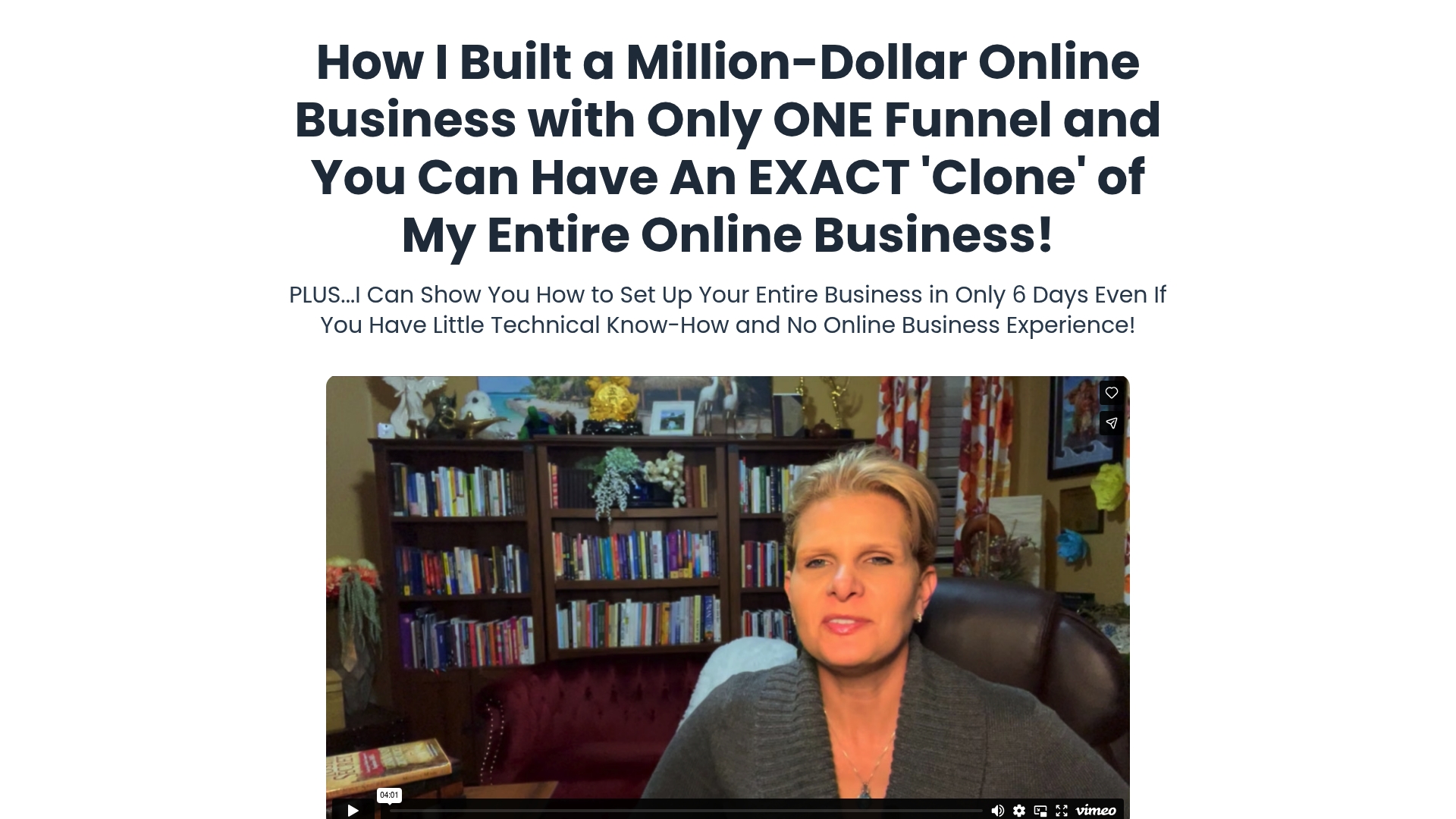
Moneyfunnel's 6-Day Mentorship Program is built specifically for this moment. Over six days, you get a structured, step-by-step walkthrough of building a sales funnel that attracts and converts customers online. The program covers offer creation, funnel setup, and customer acquisition, with direct mentorship and group support throughout. Moneyfunnel provides educational guidance and strategic frameworks, not earnings guarantees. If you are ready to move from planning to building, this is a concrete next step worth taking.
FAQ
What does entrepreneurship step by step actually mean?
Entrepreneurship step by step means following a sequential process from idea validation through legal setup, skill building, and customer acquisition before scaling. It reduces financial risk by testing each phase before committing fully.
How long does it take to start an online business?
A realistic timeline is 12–18 months, including a 60–90 day validation phase while keeping your current income and building at least one year of financial runway before going full-time.
Do I need a formal business plan to start?
A formal business plan is not required to launch. A living business plan that you update as you learn works better than a static document written before you have real customer data.
What legal steps do I need to take first?
Obtain an EIN from the IRS, choose a business structure such as an LLC, register with your state, and open a dedicated business bank account. These four steps form the legal foundation of any new business.
What is the biggest mistake first-time entrepreneurs make?
The most common mistake is quitting a stable income before validating demand. Securing three paying customers and sufficient financial runway before going full-time is the threshold that separates sustainable businesses from failed attempts.