
Most people who explore online entrepreneurship picture flexible mornings, passive income, and a laptop on a beach. The reality of why choose online entrepreneurship as a serious path is far more nuanced than that fantasy. Yes, the freedom is real. So is the grind. This guide cuts through the noise to show you the genuine advantages, the real challenges, and the strategies that separate people who build something lasting from those who quit after three months. If you want a clear-eyed picture of what online entrepreneurship actually offers in 2026, you're in the right place.
Table of Contents
- Key takeaways
- Why choose online entrepreneurship over traditional paths
- Real challenges you need to understand first
- Online entrepreneurship vs. remote jobs vs. traditional business
- Strategies that actually work for online entrepreneurs
- My honest take on online entrepreneurship
- Ready to build your online business the right way?
- FAQ
Key takeaways
| Point | Details |
|---|---|
| Lower costs, higher upside | Online businesses eliminate rent and large staffing costs, freeing capital for growth and marketing. |
| Failure is common but avoidable | About 70% of new online ventures fail within two years, but disciplined planning dramatically improves your odds. |
| Trust requires deliberate effort | Without face-to-face interaction, consistent digital branding becomes your most important credibility tool. |
| Scalability is the real advantage | Digital products and automated systems let you grow revenue without proportionally growing your workload. |
| Mindset determines longevity | Treating your online business with the same discipline as a traditional job separates sustainable builders from burnout cases. |
Why choose online entrepreneurship over traditional paths
The benefits of online business go well beyond working in your pajamas. When you strip away the hype, there are concrete structural advantages that make online entrepreneurship genuinely compelling.
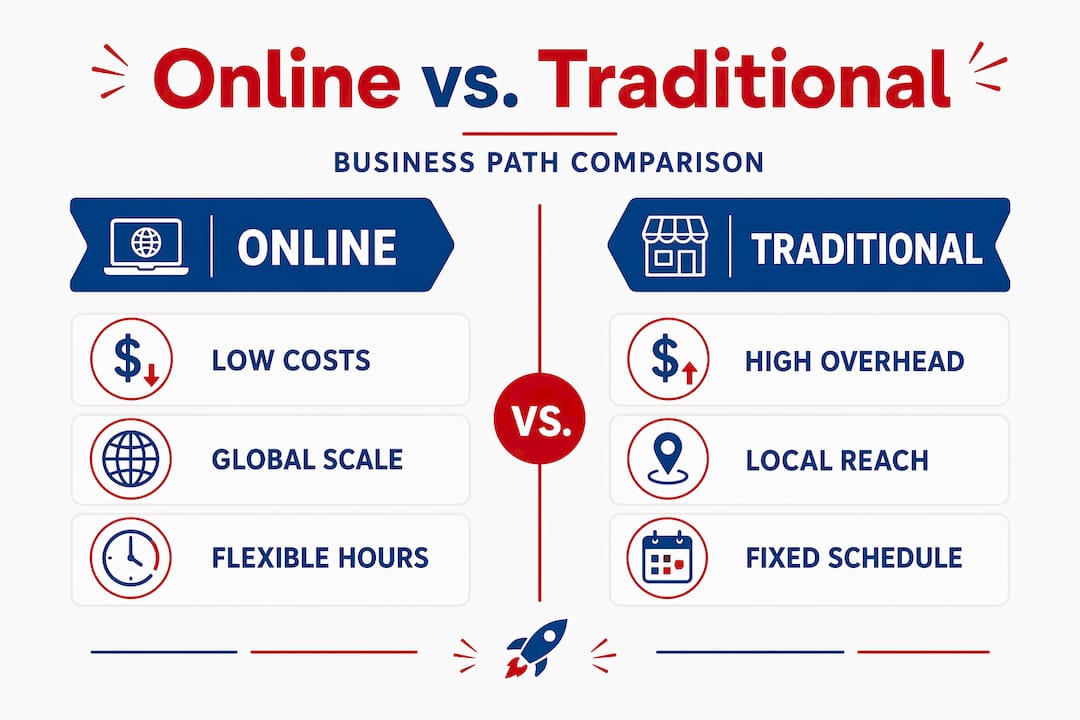
Lower startup costs change the math entirely. A traditional brick-and-mortar business requires lease deposits, buildouts, inventory, and staff before you earn a single dollar. An online business can launch with a domain, a website, and a clear offer. Eliminating rent and utilities frees that capital for marketing and product development, where it actually generates returns.

Scale is not limited by geography. A physical store serves whoever walks through the door. An online business serves anyone with an internet connection, anywhere in the world, at any hour. Digital presence removes geographic barriers and allows 24/7 sales without additional labor costs. That is a structural advantage no local business can replicate.
The income potential reflects that scale. Consider content creators: podcasters who reach 10,000 downloads per episode can earn $426 to $7,000 per episode, and that range grows as their audience grows. The same content generates revenue repeatedly without additional production costs.
Here is what the core advantages of starting online look like in practice:
- Automation replaces repetitive labor. Email sequences, checkout systems, and customer onboarding can run without you present.
- Flexible hours let you design your schedule around your most productive windows, not a commute.
- Equity creation is possible. A well-built online business becomes a sellable asset, unlike a salary.
- Iteration speed is faster. You can test a new offer in days, not months.
- Global customer base means your niche does not need to be large locally to be profitable globally.
Pro Tip: Before you launch, identify one specific audience problem you can solve digitally. The clearest path to profit is a focused offer, not a broad platform.
Real challenges you need to understand first
Here is where most articles fail you. They list the benefits and gloss over the part where about 70% of new online ventures fail within two years. That number is not meant to scare you off. It is meant to help you prepare.
The most common reasons online businesses fail early are predictable and preventable:
- Inconsistent income in the early months. Unlike a paycheck, online revenue is irregular. Many entrepreneurs underestimate how long it takes to build a reliable customer base and run out of runway before they get there.
- Unsustainable work hours. The startup phase of an online business often demands 60 to 80 hours per week. That is not a myth. It is the reality of building systems, creating content, handling customer service, and marketing simultaneously.
- Trust deficits with new customers. Success depends on consistent messaging and building online authority because you cannot shake someone's hand or let them see your storefront. Every touchpoint online carries more weight than it would offline.
- Lack of routine leading to burnout. The freedom of working from anywhere sounds appealing until it means you never fully stop working. Without clear routines and boundaries, productivity collapses and burnout follows.
- Treating it like a hobby instead of a business. This is the single most common reason smart people fail. Discipline, financial tracking, and strategic planning are not optional.
"The online business lifestyle everyone wants is real. But it is built on a foundation of structure, not spontaneity. The entrepreneurs who last are the ones who treat freedom as the reward for discipline, not the starting point."
Pro Tip: Set fixed working hours from day one, even if your schedule is flexible. Boundaries protect your energy and your output.
Knowing how to build trust online is a skill worth developing early. Strategies like social proof, transparent communication, and consistent brand voice are not extras. They are the foundation of customer confidence when you have no physical presence to rely on.
Online entrepreneurship vs. remote jobs vs. traditional business
Understanding why start an online business requires seeing it clearly against the alternatives. Here is an honest comparison:
| Factor | Online entrepreneurship | Remote job | Traditional business |
|---|---|---|---|
| Startup capital | Low to moderate | None | High |
| Monthly expenses | Low | None | High |
| Income ceiling | Unlimited | Capped by salary | High but limited by location |
| Time to profitability | 6 to 24 months | Immediate | 1 to 3 years |
| Equity potential | High | None | Moderate |
| Risk level | High | Low | Very high |
| Scalability | Very high | None | Limited by geography |
The numbers tell an interesting story. A lead generation model achieves 3.6 times more income than a remote job with 58% fewer hours, and 2.7 times more than a traditional online business with 68% fewer hours. That is not a guarantee, but it illustrates how the right business model changes the entire equation.
What online entrepreneurship offers that neither remote jobs nor traditional businesses can match:
- Compounding assets. A course, a membership site, or a software product generates revenue long after you build it.
- Location independence. You are not tied to a city, a lease, or a commute.
- Business ownership. You build something with real market value that you can sell, license, or expand.
The trade-off is real: you accept more risk and delayed income in exchange for higher long-term upside. That trade-off is worth it for the right person with the right preparation.
Strategies that actually work for online entrepreneurs
The importance of digital entrepreneurship is not just in starting. It is in building something that lasts. Here is what separates sustainable online businesses from ones that flame out:
Build assets you own, not audiences you rent. Entrepreneurs who prioritize owned audiences and scalable digital products reduce their dependence on third-party platforms. An email list, a membership community, or a proprietary course is yours. A social media following can disappear overnight when an algorithm changes.
Invest in your digital brand before you need it. Consistent messaging, a clear visual identity, and a recognizable voice build the kind of trust that converts strangers into buyers. This is not about aesthetics. It is about credibility. Customers who find you online have no other signal to judge your legitimacy.
Use automation to protect your time. Email marketing platforms, scheduling tools, and payment processors can handle tasks that would otherwise consume hours every week. The goal is to build systems that work while you focus on the parts only you can do.
Additional practices that separate those who succeed online from those who struggle:
- Set a weekly financial review. Know your revenue, expenses, and profit margin at all times.
- Protect your health. Physical and mental health directly affect output. Schedule exercise, sleep, and recovery like meetings.
- Think in quarters, not days. Short-term revenue chasing leads to scattered strategy. Long-term asset building creates compounding returns.
- Specialize before you diversify. Master one channel, one audience, and one offer before expanding.
Pro Tip: Your email list is your most valuable business asset. Start building it from day one, even before your product is ready.
My honest take on online entrepreneurship
I have watched a lot of people approach online entrepreneurship with the wrong frame. They see the success stories and assume the path is shorter than it is. What I have learned is that the people who build real, lasting businesses online share one trait: they stopped thinking about quick revenue and started thinking about durable assets.
In my experience, the first year is almost always harder than expected and more educational than any course you could take. The time management challenges are real. The trust-building grind is real. But they are also completely manageable once you accept that this is a long game.
What I find most encouraging is that the structural advantages of online entrepreneurship are genuine. Lower costs, global reach, and scalable income are not marketing language. They are real features of the model. The people who fail are usually not failing because online business does not work. They are failing because they treated it like a lottery ticket instead of a business.
My honest advice: go in with realistic expectations, a clear plan, and the willingness to treat your business with the same seriousness you would give any professional commitment. The rewards are proportional to that seriousness.
— Mike
Ready to build your online business the right way?
If this guide has you thinking seriously about your next move, the 6-Day Money Funnel Mentorship at Moneyfunnel is worth a close look. It is a structured, hands-on program built for people who want to learn digital marketing strategies and scalable business models without spending months figuring it out alone.
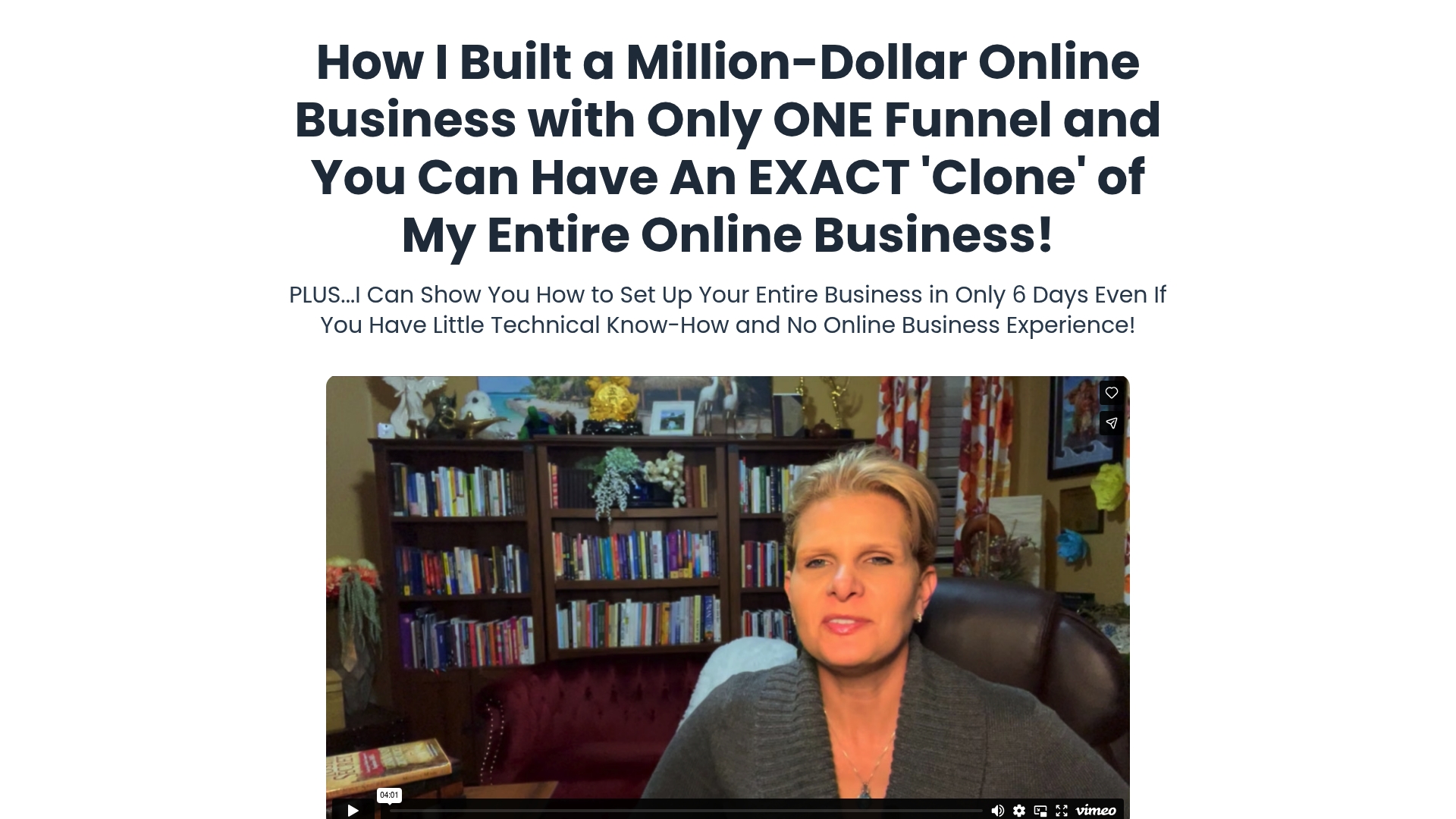
The program walks you through the exact systems used to generate real online revenue, with group mentorship that keeps you accountable and on track. Moneyfunnel does not promise overnight results or guaranteed earnings. What it offers is a clear, tested framework and the guidance to apply it. If you are serious about online entrepreneurship and want to compress your learning curve, this is where to start.
FAQ
Why choose online entrepreneurship over a traditional job?
Online entrepreneurship offers unlimited income potential, equity-building, and location independence that a traditional job cannot match. The trade-off is higher risk and a longer path to stable income.
What is the biggest challenge for new online entrepreneurs?
Building customer trust without face-to-face interaction is one of the hardest early challenges, along with managing inconsistent income and avoiding burnout from long startup hours.
How long does it take to profit from an online business?
Most online businesses take between 6 and 24 months to reach consistent profitability, depending on the model, the market, and the consistency of execution.
Is online entrepreneurship worth it in 2026?
Yes, for the right person with realistic expectations. The advantages of starting online, including low overhead, global reach, and scalable income, make it one of the strongest paths to financial independence available today.
What business models scale best online?
Digital products, membership sites, software, and lead generation models tend to scale most effectively because they generate revenue without proportionally increasing your time or labor costs.