
The best practices for entrepreneurs start with one non-negotiable step: validate your idea with paying customers before you build anything. Foundra.ai, AIM Elevate, and MIT Sloan research all confirm that founders who skip validation face the steepest failure rates. This guide covers the core entrepreneurial strategies every aspiring business owner needs, from customer interviews and cash flow forecasting to team building and pricing discipline. Each section draws on real frameworks, not generic advice.
1. What are the vital early validation practices every entrepreneur should master?
Validation is the single highest-leverage activity in the early stage of any business. Most founders skip it because building feels more productive than talking to strangers. That instinct is wrong and expensive.
Start with 10–20 deep customer interviews focused entirely on past behaviors, not hypothetical preferences. Ask what people have already paid for, not what they wish existed. Past behavior predicts purchase intent far better than any survey.

Build a one-sentence ideal customer description before you write a single line of code or create any product. For example: "I help freelance designers who lose clients to cheaper competitors win on value instead of price." That sentence filters every decision you make for the next six months.
Use a landing page test or a minimum viable product launch to measure real demand. Real demand means someone hands you money or signs a letter of intent. Anything less is just encouragement.
Avoid premature incorporation before you have paying customers. Legal structure costs time and money. Validate first, formalize second.
Pro Tip: Run your landing page test for two weeks before spending anything on product development. If you cannot get five people to click "buy now," the offer needs work, not the product.
2. How can entrepreneurs maintain financial discipline for sustainable growth?
Financial discipline is the difference between a business that survives its first year and one that does not. Most founders underestimate how fast cash disappears when revenue is inconsistent.
Set aside 20–30% of every payment you receive into a dedicated tax account immediately. Do not wait until the end of the quarter. Quarterly estimated tax payments catch many first-time founders off guard, and the penalties compound quickly.
Run a 13-week rolling cash flow forecast updated every week. This forecast shows you exactly when you will run out of money if revenue stalls. It forces you to make hiring and spending decisions based on facts, not optimism.
Test your pricing with your first 15 customers. A 30–50% acceptance rate signals you have found a workable price point. An 80% acceptance rate means you are charging too little. A 10% rate means you are charging too much. Adjust before you scale.
Key financial habits to build from day one:
- Separate your business and personal bank accounts immediately
- Track every expense in a simple spreadsheet or tool like QuickBooks
- Review your sales pipeline weekly, not monthly
- Prioritize recurring revenue contracts over one-time projects
- Know your burn rate every single week
Pro Tip: Open a second business checking account on day one and label it "Tax Reserve." Transfer a fixed percentage of every deposit automatically. You will never scramble at tax time again.
3. Which entrepreneurial strategies help founders avoid common pitfalls?
The biggest strategic mistake founders make is pursuing two conflicting business models at the same time. You cannot be the low-cost option and the premium brand simultaneously. Picking a lane is not a limitation. It is a competitive advantage.
MIT Sloan's Entrepreneurial Strategy Compass recommends testing at least two distinct commercialization routes before committing to one. For example, test a direct-to-consumer approach alongside a B2B licensing model. Run both for 60 days, measure revenue signals, and then commit fully to the stronger route.
"Entrepreneurial strategy is not a document but a repeatable decision system focusing on dynamic execution." — Business Model Analyst
Psychological detachment from your original product idea is a skill, not a personality trait. Founders who pivot based on market feedback consistently outperform those who defend their original vision past the point of evidence. The product is a hypothesis. The customer's wallet is the test.
Saying no is a growth strategy. Define your ideal customer in one sentence and use it to filter every inbound opportunity. If a prospect does not match that description, declining their business protects your focus and your margins.
- Test two distinct routes before committing to one strategy
- Detach emotionally from the original product concept
- Use your ideal customer description as a filter for every opportunity
- Treat every strategy as a hypothesis subject to revision
4. What operational habits support effective execution every week?
Execution separates founders who grow from founders who stay busy. Busyness and progress are not the same thing. Most weeks, the activities that actually move revenue are a short list.
Focus on 3–5 revenue-generating activities each week. These include sending sales proposals, following up with warm leads, publishing content that drives inbound inquiries, and closing deals. Everything else is support work and should be scheduled in dedicated blocks, not scattered throughout the day.
Audit your calendar every month. Look at where your time actually went versus where you planned to spend it. Most founders discover they spent the majority of their week on administrative tasks that could be batched or delegated.
Writing persuasively for sales emails and landing pages is one of the most underrated founder skills. A single well-written email sequence can generate more revenue than a week of meetings. Invest time in learning direct response copywriting basics through resources like Copyhackers or the book Breakthrough Advertising by Eugene Schwartz.
| Weekly Activity | Revenue Impact | Priority Level |
|---|---|---|
| Sending sales proposals | Direct | High |
| Following up with warm leads | Direct | High |
| Publishing inbound content | Indirect | Medium |
| Administrative tasks | None | Low |
| Team check-ins | Indirect | Medium |
Pro Tip: Block your first two hours every morning for revenue-generating work only. No email, no Slack, no meetings. Protect that window like a client appointment.
5. How can entrepreneurs build a team while protecting financial control?
Hiring too early is one of the most common and most costly mistakes in early-stage businesses. A full-time employee brings salary, benefits, payroll taxes, and management overhead before your revenue can support it.
Hire contractors for 3–6 months before committing to any full-time role. Contractors give you flexibility to scale up or down based on actual workload. They also reveal whether the role is truly necessary at the volume you assumed.
Before making any full-time hire, confirm you have 4–6 months of that salary sitting in your business account. That reserve protects you if revenue dips during onboarding. Many founders who skipped this step faced payroll stress within 90 days of their first hire.
Key principles for early-stage team building:
- Start every new role as a contract engagement
- Define clear deliverables and timelines before the first day
- Secure 4–6 months salary reserve before converting anyone to full-time
- Use mentors and peer groups for strategic guidance rather than paid consultants
- Delegate tasks, not decisions, until you have established trust with a team member
Mentors and peer groups provide a return that paid consultants rarely match at the early stage. A founder peer group like EO (Entrepreneurs' Organization) or a local SCORE chapter gives you access to real experience without the invoice.
Key takeaways
Successful entrepreneurship requires validation before building, financial discipline from day one, and a clear strategy that you test and revise based on real market signals.
| Point | Details |
|---|---|
| Validate before you build | Conduct 10–20 customer interviews and test demand with a landing page before investing in product development. |
| Manage cash flow weekly | Run a 13-week rolling forecast and set aside 20–30% of revenue for taxes from the start. |
| Test your strategy, then commit | Use MIT Sloan's two-route approach to find the strongest commercialization path before going all-in. |
| Focus on revenue activities | Limit your weekly priorities to 3–5 actions that directly generate revenue. |
| Hire contractors first | Build a 4–6 month salary reserve before converting any contractor to a full-time employee. |
What I have learned after watching hundreds of founders make the same mistakes
The validation step is where most aspiring entrepreneurs lose. Not because they do not know it matters, but because they convince themselves they have already done it. Talking to five friends who say "that sounds cool" is not validation. A stranger paying you $50 for something you built in a weekend is validation. Those two things are not even in the same category.
The financial discipline piece surprises people the most. Founders who come from salaried jobs have never had to think about quarterly taxes or burn rate. They treat every dollar of revenue as profit. That mistake does not show up immediately. It shows up six months later when the tax bill arrives and the account is empty.
The strategy frameworks from MIT Sloan and Business Model Analyst are genuinely useful, but only if you treat them as tools rather than templates. I have seen founders read about the Entrepreneurial Strategy Compass and then spend three weeks building a strategy document instead of talking to customers. The framework is a prompt for action, not a substitute for it.
The one habit that separates founders who build real businesses from those who stay stuck is the weekly revenue audit. Every Friday, ask yourself: what did I do this week that directly caused money to move? If the answer is vague, the next week needs to be different. That question, asked consistently, will tell you more about your business than any dashboard.
— Mike
Moneyfunnel's mentorship program for aspiring entrepreneurs
Knowing the right practices is one thing. Executing them inside a real business, under real pressure, is another challenge entirely. Moneyfunnel was built specifically for aspiring entrepreneurs who want a proven system rather than a collection of disconnected tips.
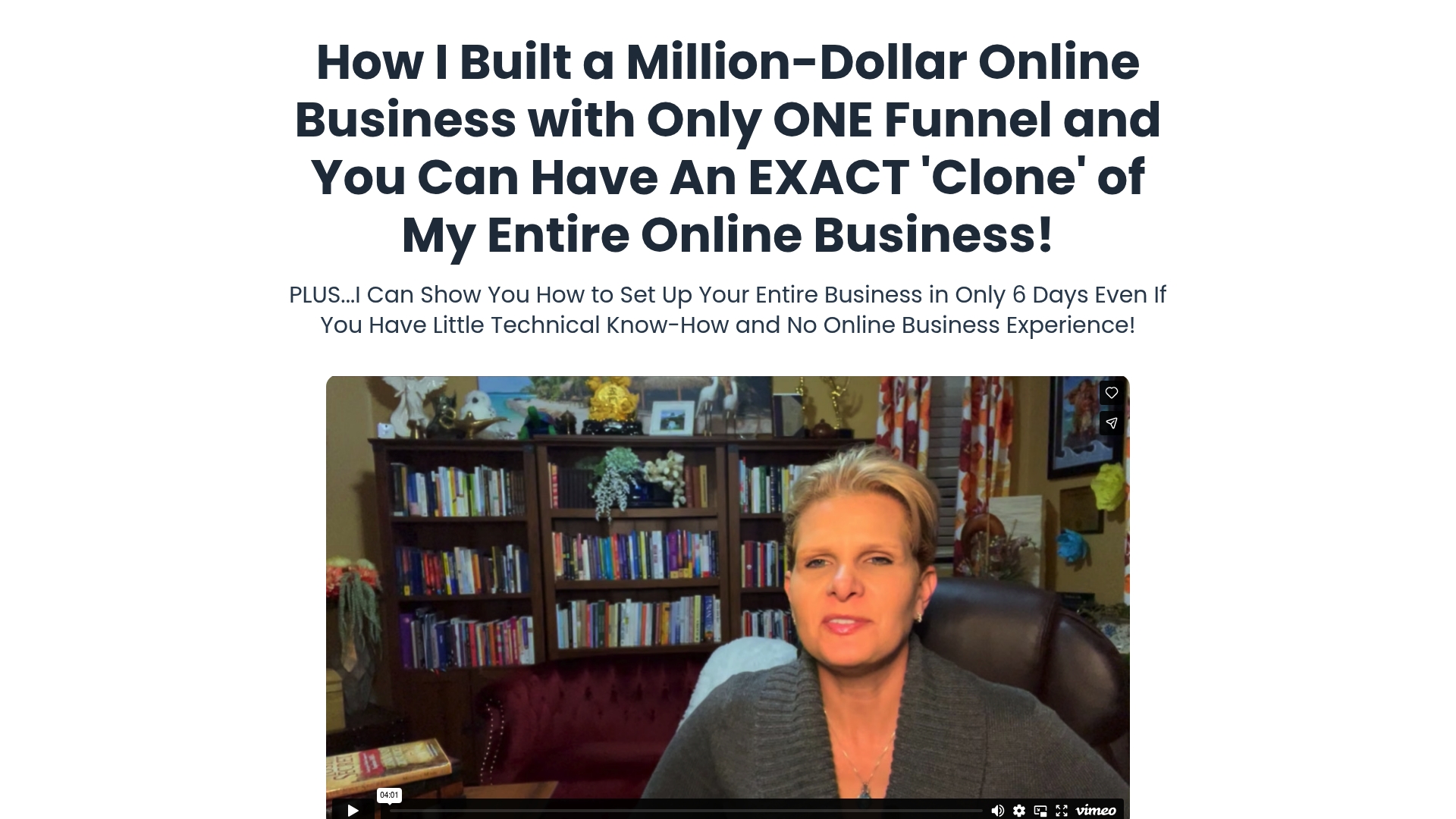
The 6-Day Money Funnel Mentorship walks you through the exact steps used to build a sales funnel that generated $10 million in revenue. The program covers customer acquisition, funnel setup, and the business growth strategies that actually move revenue. Group mentorship keeps the program focused and the cohort small. If you are ready to apply what this article covers inside a structured system, Moneyfunnel is the next step.
FAQ
What is the first step every new entrepreneur should take?
Validate your idea with paying customers before building anything. Conduct 10–20 customer interviews focused on past behaviors and test demand with a landing page or minimum viable product.
How much should entrepreneurs set aside for taxes?
Set aside 20–30% of every payment into a dedicated tax account immediately. This covers quarterly estimated tax payments and prevents cash shortfalls at year end.
What does the MIT Sloan Entrepreneurial Strategy Compass recommend?
It recommends testing at least two distinct commercialization routes, such as direct-to-consumer versus B2B licensing, before committing fully to one strategy.
When should a founder hire their first full-time employee?
Hire contractors for 3–6 months first. Convert to full-time only after you have confirmed the role is necessary and have 4–6 months of that salary in reserve.
How many revenue-generating activities should a founder do each week?
Focus on 3–5 revenue-generating activities per week, such as sending proposals, following up with leads, and closing deals. Treat everything else as secondary work.