
Choosing from the flood of online business ideas 2026 has to offer is genuinely hard. Not because the options are bad, but because too many of them look equally promising on the surface. AI tools are changing what's possible. Social platforms are becoming full storefronts. Digital products can now be created in hours instead of weeks. If you pick the wrong model for your skills and resources, you lose months. Pick the right one, and you can be generating real income within 60 to 90 days. This article breaks down the top business models, what they actually require, and how to know which one fits you.
Table of Contents
- Key takeaways
- How to evaluate online business ideas in 2026
- 1. AI-powered digital product sales
- 2. Social commerce and AI-enhanced customer service
- 3. Agentic ecommerce and always-on AI marketing
- 4. Comparing the top online business models of 2026
- My honest take on building an online business in 2026
- Ready to launch your 2026 online business idea?
- FAQ
Key takeaways
| Point | Details |
|---|---|
| Profit is realistic fast | Low-barrier online businesses can produce $300 to $2,000 per month within 90 days when launched correctly. |
| AI changes the entry rules | AI tools cut production costs and time for digital products, making solo operation more viable than ever before. |
| Social commerce is exploding | US social commerce is projected at $79.64 billion in 2026, making social-first selling a serious business model. |
| Execution beats tools | Brands that integrate AI into workflows consistently outperform those using AI tools in isolation. |
| Mentorship shortens the curve | Guided programs help new entrepreneurs avoid costly early mistakes and reach income milestones faster. |
How to evaluate online business ideas in 2026
Not every trending idea is worth your time. Before committing to any model, you need a framework for filtering the real opportunities from the noise. Here are the five criteria worth measuring every idea against.
- Profit potential. Popular online businesses can generate $300 to $2,000 per month within 60 to 90 days, with higher-ceiling models like dropshipping reaching $15,000 per month and freelance services hitting $5,000 per month for skilled operators.
- Ease of entry. How much does it cost to start? What technical skills are needed? Ideas that require $0 to $500 to launch and no coding experience are better starting points for most people.
- AI and personalization fit. The best online business trends 2026 has surfaced all involve AI in some capacity. Models that let you use AI to reduce labor, improve customer experience, or speed up production have a structural advantage.
- Market demand and scalability. A business that works at $1,000 per month but hits a wall at $5,000 is a job, not a business. Prioritize models that scale through systems, not more hours.
- Economic resilience. High interest rates and workforce shortages are pushing entrepreneurs toward lean, AI-assisted models that keep overhead low and output high.
Pro Tip: Before choosing your business model, write down your available hours per week, your starting budget, and whether you prefer creating, selling, or managing. Your honest answers will eliminate half the list immediately.
1. AI-powered digital product sales
Selling digital products has always been attractive because there's no inventory, no shipping, and near-zero cost per sale after the initial creation. In 2026, AI has completely changed the production side of this equation.
You can now create ebooks, templates, prompt libraries, design assets, and micro SaaS tools in a fraction of the time it used to take. What once required a freelancer or a week of work can be produced in an afternoon. That compression of effort is the real opportunity here.
The business model works like this: you identify a specific problem a defined audience has, create a digital product that solves it, and sell it through platforms like Gumroad, Etsy, or your own website. The AI personalization advantage is real too. Businesses using AI shopping assistants report up to a 20% increase in conversion rates, and 80% of consumers prefer personalized experiences over generic ones.
- Low startup costs: Most tools needed to create and sell digital products cost under $100 per month.
- Scalable by design: One product can sell thousands of times with no additional effort.
- AI accelerates production: Content, graphics, and even functional tools can be built using AI platforms without specialized skills.
- Micro SaaS is a standout: Building a small, narrowly focused software tool that solves one problem for one audience is one of the most profitable startup ideas for 2026.
Pro Tip: Don't try to build a product for everyone. The more specific your audience, the easier it is to market and the higher your conversion rate. "Templates for freelance UX designers" will outperform "design templates" every time.
2. Social commerce and AI-enhanced customer service
Social commerce isn't just a feature anymore. It's a full business channel. US social commerce is projected to hit $79.64 billion in 2026, and 76% of consumers report making purchases after seeing content on social media. That number alone should tell you where buyer attention is concentrated.
The model works by building a presence on platforms like TikTok Shop, Instagram, or Pinterest, then selling directly through those channels without requiring the buyer to leave the app. The friction is lower, the discovery is organic, and the buying decision happens fast.
What makes this a top-tier business idea right now is the addition of AI-powered customer service. When a potential buyer comments on your post or sends a DM, AI tools can respond instantly with product information, sizing, availability, or personalized recommendations.
| Feature | Traditional social selling | AI-enhanced social commerce |
|---|---|---|
| Response time | Hours or manual | Seconds, fully automated |
| Personalization | Generic replies | CRM-integrated recommendations |
| After-hours coverage | None | 24/7 availability |
| Conversion support | Limited | End-to-end in social channel |
Integrating CRM data and purchase history into your social commerce support lets you have high-intent conversations directly inside the platform where the buyer already is. That's a meaningful advantage over any business still relying on email follow-ups and static product pages.
3. Agentic ecommerce and always-on AI marketing
This is where future online business concepts are heading fastest. Agentic commerce means your business uses AI agents that operate continuously. They don't wait for you to run a campaign or write an email. They monitor, adjust, and act on their own based on rules and goals you set.
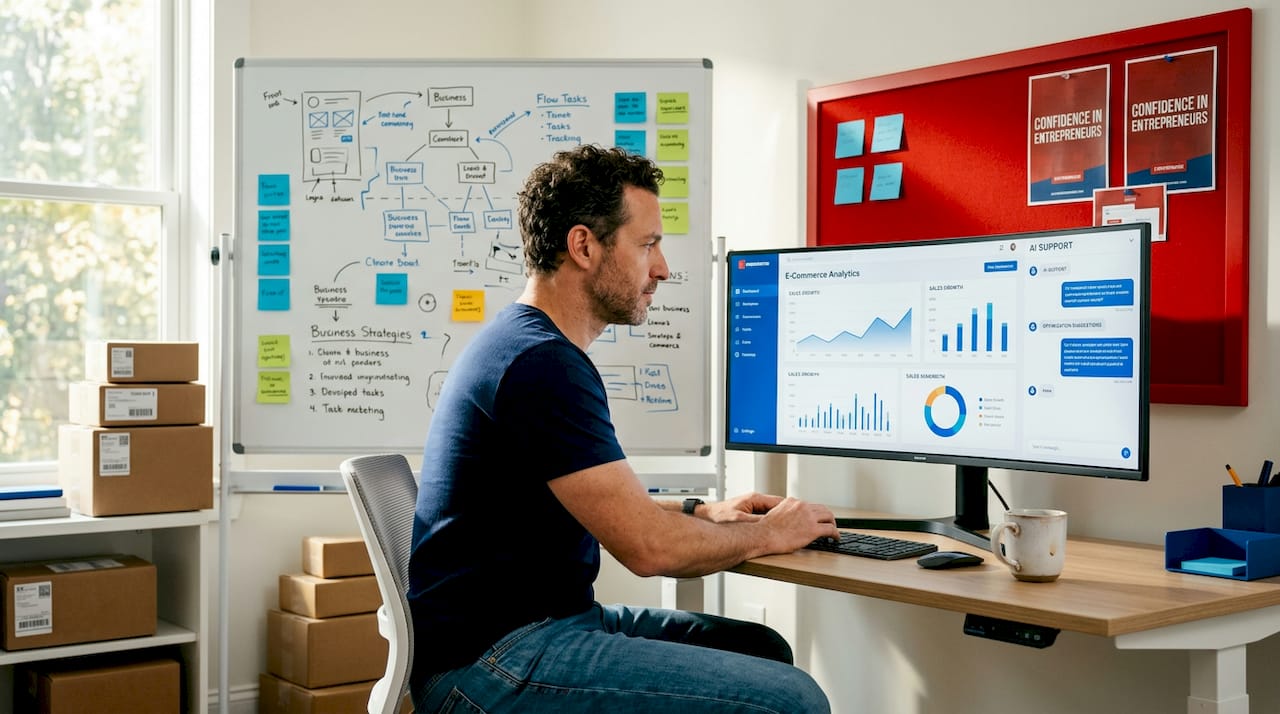
The market forecast makes this worth paying attention to. AI-driven digital transactions are expected to represent 20% of all transactions by 2030, and 60% of shoppers already expect AI agents to handle parts of their buying experience. The US agentic commerce market is projected to reach $300 to $500 billion by 2030.
For you as an entrepreneur, this doesn't mean building complex software. It means setting up your ecommerce operation so that AI agents handle product discovery optimization, abandoned cart recovery, personalized upsells, and ad performance adjustments while you focus on sourcing, partnerships, and creative direction.
| Marketing approach | Campaign-based | Always-on AI-driven |
|---|---|---|
| Activation | Manual, scheduled | Continuous, automated |
| Optimization speed | Weekly or monthly | Real-time |
| Cost efficiency | Variable, often wasteful | Tied directly to profit metrics |
| Scalability | Limited by team size | Scales independently |
Successful ecommerce teams are shifting from channel-first thinking to mission-led, always-on journeys. The ones winning in 2026 have stopped asking "What campaign should we run?" and started asking "What should our AI be doing right now to move someone closer to buying?"
Pro Tip: Start with one AI agent focused on cart abandonment recovery. It's the highest-ROI entry point into agentic commerce and requires minimal setup compared to full workflow automation.
4. Comparing the top online business models of 2026
If you've read this far, you're probably narrowing your options. Here's a direct side-by-side breakdown to help you match the right model to your situation.
| Business model | Startup cost | Earnings ceiling | Tech complexity | Best for |
|---|---|---|---|---|
| AI digital products | Under $100 | $5,000 to $20,000/month | Low to medium | Creators, writers, designers |
| Social commerce | $0 to $500 | $10,000 to $50,000/month | Low | Content creators, product sellers |
| Agentic ecommerce | $500 to $2,000 | Unlimited | Medium to high | Tech-comfortable entrepreneurs |
A few points worth spelling out clearly:
- If you're starting with under $500 and want results within 90 days, AI digital products or social commerce are your best entry points.
- If you have some budget, tolerance for learning, and want to build a business with long-term scaling potential, agentic ecommerce is worth the steeper setup curve.
- Small businesses using AI report measurable gains in efficiency and cost reduction, with 57% saying AI has improved their daily work. That's not a marginal benefit. It's a structural shift in how lean a solo operation can run.
- Learning how to start an online business in 2026 without understanding where AI fits in the workflow puts you at an immediate disadvantage against competitors who have already integrated it.
The market risk is also worth noting. Social commerce depends on platform algorithm stability. Digital products require differentiation as the market gets more crowded. Agentic ecommerce requires clean data and reliable infrastructure. None of these models are risk-free, but all three are far more defensible than generic dropshipping with no AI layer.
My honest take on building an online business in 2026
I've watched a lot of people launch online businesses over the past several years, and I've noticed a consistent pattern. The ones who struggle aren't the ones who chose the wrong tool. They're the ones who thought adding a tool was the same as having a strategy.
AI adoption has genuinely moved from experimentation to something closer to a required operating layer. But I've seen entrepreneurs stack five AI tools onto a broken business model and wonder why nothing improved. The tool isn't the business. The workflow is the business. Treating AI as part of an integrated system with clear ownership tied to profit metrics is what separates the operators who scale from the ones who stay stuck.
What I've also learned is that the businesses with the best retention aren't the ones with the slickest tech. They're the ones where customers feel genuinely seen. AI handles the operational work well. But building trust online still requires a human touch at key moments. Your job in 2026 is to figure out exactly where those moments are and protect them.
The best online business you can build this year is one where the AI handles what should be automated and you show up where presence actually matters.
— Mike
Ready to launch your 2026 online business idea?
Knowing which business model fits you is one thing. Having a step-by-step system to actually launch it is something else entirely.
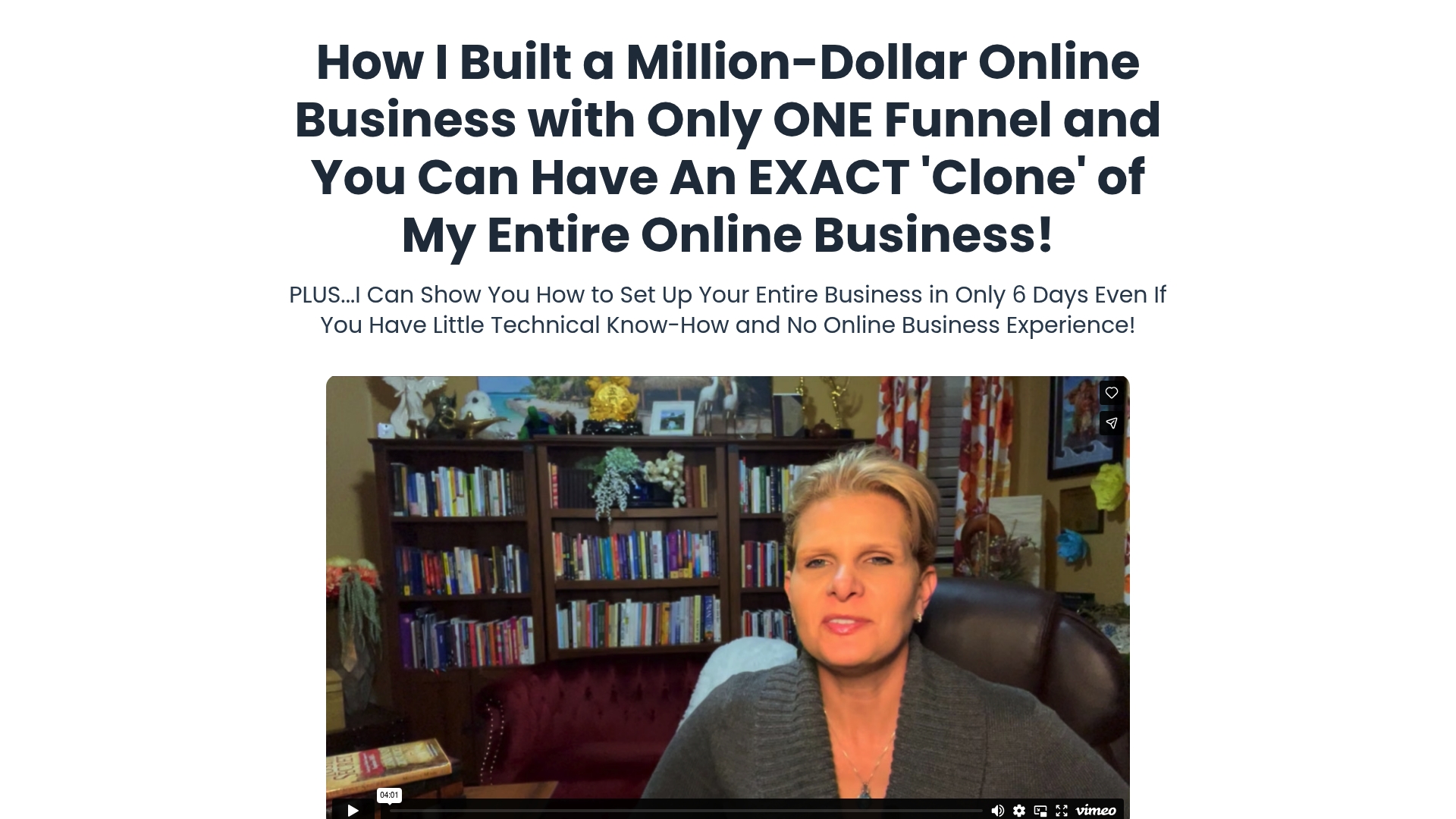
Moneyfunnel's 6-Day Mentorship Program was built specifically for aspiring entrepreneurs who want to move fast without burning money on trial and error. The program walks you through building a proven sales funnel system, incorporating current AI and digital commerce strategies, and getting your business generating income with minimal technical overhead. It's the kind of guided structure that compresses months of learning into less than a week. If you're serious about turning one of these 2026 business ideas into a real income stream, this is a practical starting point worth exploring. Spots are limited, so check availability now.
FAQ
What are the best online business ideas for 2026?
The top models for 2026 include AI-powered digital product sales, social commerce through TikTok Shop or Instagram, and agentic ecommerce. Each offers low entry costs and strong growth potential when combined with AI tools.
How much can you realistically earn from an online business in 2026?
Early-stage online businesses consistently generate $300 to $2,000 per month within 60 to 90 days, with higher-performing models like ecommerce or social commerce reaching $15,000 per month or more as they scale.
How does AI affect online business success in 2026?
AI improves daily operations for 57% of small business owners and increases conversion rates by up to 25% when used for personalization and customer engagement. Businesses that integrate AI into workflows outperform those using it as a standalone tool.
What is agentic commerce and why does it matter?
Agentic commerce uses AI agents to handle transactions and marketing continuously, without manual input. It matters because it allows solo entrepreneurs to operate at the scale of a larger team without hiring.
Do I need technical skills to start an online business in 2026?
Most entry-level business models in 2026 require little to no coding. Platforms like AI ecommerce tools handle the technical work, letting you focus on products, content, and customer relationships.