
You already know the idea is possible. What stops most people isn't ambition. It's not knowing where to begin, which steps matter most, and how to avoid the mistakes that quietly kill new online businesses before they ever gain traction. Learning how to start online business successfully means cutting through the noise and following a sequence that actually works. This guide gives you that sequence: from picking the right model and validating your idea, to handling the legal setup and building an audience that buys. No fluff, no vague advice.
Table of Contents
- Key takeaways
- How to start an online business: picking the right model
- Validating your idea before spending real money
- Legal and financial setup essentials
- Launching and growing your online presence
- Common beginner mistakes to avoid
- My honest take on starting an online business
- Ready to go deeper? Here is your next step
- FAQ
Key takeaways
| Point | Details |
|---|---|
| Choose the right model first | Match your business model to your skills, time, and budget before spending a dollar. |
| Validate before you build | Test demand with landing pages and email signups before investing heavily in any product or service. |
| Get legal basics done early | Register your business structure, get a free EIN, and open a separate business bank account from day one. |
| Start on marketplaces | Platforms like Amazon or Etsy give you instant traffic while you build your own audience. |
| Expect months 3 to 6 for profit | First profits typically arrive between months 3 and 6, so plan your finances accordingly. |
How to start an online business: picking the right model
The single biggest decision you will make is choosing your business model. Get this wrong and you can work hard for months with almost nothing to show for it. Get it right and every other step becomes much easier.
Here are the most proven models for beginners starting an online business in 2026:
- Freelancing: Sell a skill you already have (writing, design, coding, video editing). Fastest path to income, lowest startup cost.
- Digital products: Create once, sell repeatedly. Think templates, eBooks, courses, or Notion dashboards. High margin, scalable.
- Dropshipping: Sell physical products without holding inventory. Requires marketing skills and solid supplier relationships.
- Affiliate marketing blogging: Earn commissions by recommending other companies' products through content. Slower to build but highly passive once established.
- Coaching or consulting: Package your expertise into sessions or programs. Premium pricing, low overhead.
When choosing between these, ask yourself three questions. How fast do you need income? What skills do you already have? How much can you invest upfront? Freelancing wins on speed. Digital products win on long-term margin. Dropshipping requires the most marketing knowledge to do profitably.
Once you pick a model, define your niche tightly. "Fitness" is not a niche. "Strength training for women over 40 with limited gym access" is. A specific customer problem solved better than anyone else is what separates businesses that grow from ones that stall.
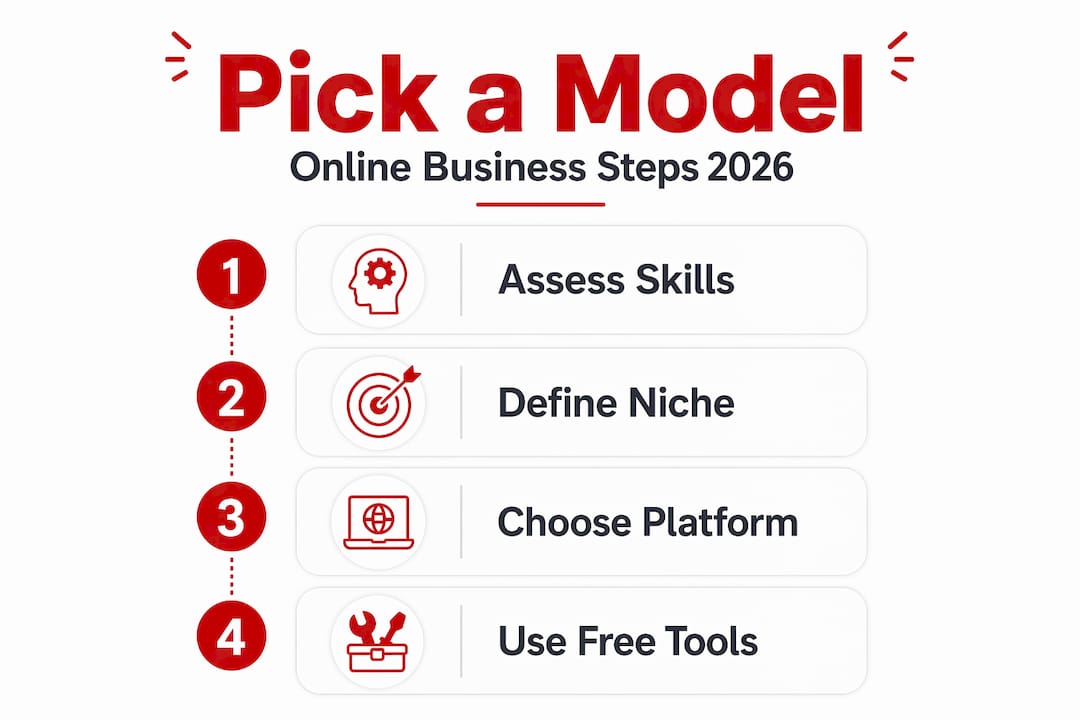
Your digital home base matters too. A basic website built on WordPress or Shopify, a clean Etsy shop, or a well-optimized Gumroad page all work. Pick one and make it professional before you do anything else.
Pro Tip: Start with free tools. Google Analytics, Canva, Mailchimp's free tier, and Google Search Console will cover 90% of what you need in your first six months.
Validating your idea before spending real money
Most online businesses fail not because the founder lacked effort but because they built something nobody wanted. Validation fixes this. It is the step most beginners skip, and skipping it is expensive.
Here is a simple four-step validation process:
- Build a landing page. Use a free tool like Carrd or a basic Mailchimp page. Describe your offer clearly and add an email signup or waitlist button.
- Drive targeted traffic. Share the page in relevant Facebook Groups, Reddit communities, or niche forums. Run a small paid ad if you have $20 to test.
- Count real signals. Micro-signals like landing page clicks and email signups tell you whether real demand exists before you build anything.
- Talk to potential customers. Five short customer interviews will teach you more than three months of guessing. Ask what they currently use, what frustrates them, and what they would pay to fix it.
Market research runs parallel to this. Use Google Keyword Planner to check search volume for your niche. Look at competitor reviews on Amazon or Etsy and read the one-star and three-star reviews carefully. Those reviews are a direct window into unmet customer needs.
"Building a community and audience before launching a product builds credibility and ensures fit to real needs." — Fast Company
If you get ten or more email signups from cold traffic with no advertising budget, that is a green light. If you get zero in two weeks, the offer needs rethinking. Validation sprints with minimal investment prevent months of wasted effort building unproven products that the market does not want.
Legal and financial setup essentials
This is the part most beginners delay, and that delay creates real problems later. Getting your legal and financial foundation right early protects you and makes everything from taxes to partnerships much simpler.
| Task | What to do | Cost |
|---|---|---|
| Business structure | Register as sole proprietor or LLC depending on your risk level | $0 to $500 depending on state |
| EIN (Employer ID Number) | Apply free on the IRS website in minutes | Free |
| Business bank account | Open a separate account at any bank or credit union | Usually free |
| Basic bookkeeping | Use Wave (free) or QuickBooks to track income and expenses | $0 to $30/month |
| Business insurance | Required for product sellers; optional for service providers | Varies by policy |
The business structure decision comes down to liability. A sole proprietorship is the simplest setup but offers no personal liability protection. An LLC separates your personal assets from business debts, which matters if you sell physical products or take on clients. Most beginners starting a service or digital product business can start as a sole proprietor and convert later.
Your EIN is your business's tax ID number. Applying online is free and takes under ten minutes on the IRS website. Many beginners pay third-party services $50 to $300 for something the IRS provides at no cost. Do not make that mistake.
Separating personal and business finances from day one prevents accounting headaches and protects your legal liability. Open a dedicated business checking account before you make your first sale.
Pro Tip: Set aside 25 to 30 percent of every payment you receive for taxes. Self-employed individuals pay both income tax and self-employment tax, and getting caught short at tax time is a painful and avoidable problem.
Launching and growing your online presence
You have a validated idea and a legal setup. Now it is time to get in front of customers. The fastest path to your first sale is almost never building a custom website from scratch.

Marketplaces like Amazon or Etsy offer immediate access to millions of buyers and are the recommended starting point for most new sellers. You skip the traffic problem entirely and focus on your offer and fulfillment. Once you have consistent sales and understand your customer, you build your own site and migrate.
When writing product or service listings, lead with the outcome the buyer gets, not the features you provide. "Save 3 hours a week on social media planning" outperforms "social media content calendar template" every time.
Here is how to build momentum across channels:
- Content marketing: Write one blog post or record one short video per week answering a question your ideal customer is already searching for. Consistency over six months compounds into real organic traffic.
- Social media: Pick one platform where your audience already spends time. Master it before adding a second. Focusing on one platform initially drives more sustainable growth than spreading thin across five channels.
- Email list: Start building your list from day one. Email converts better than any social platform. Use a lead magnet (a free checklist, template, or mini-guide) to give people a reason to subscribe. For proven tactics on growing your email list, start with the basics and build from there.
| Channel | Best for | Time to results |
|---|---|---|
| Marketplace (Etsy, Amazon) | Physical and digital products | Days to weeks |
| SEO blog content | Long-term organic traffic | 3 to 9 months |
| Social media (organic) | Brand awareness, community | 1 to 3 months |
| Email marketing | Conversions, repeat buyers | Immediate if list exists |
| Paid ads | Fast traffic testing | Immediate, requires budget |
The realistic growth phase for most online businesses falls between months 3 and 6. Before that, you are planting seeds. After that, you start seeing compounding returns on the work you put in early.
Common beginner mistakes to avoid
Knowing what not to do is just as valuable as knowing what to do. These are the mistakes that derail most new online businesses before they reach month six:
- Trying to do everything at once. Picking two business models, three social platforms, and four revenue streams simultaneously guarantees mediocre results across all of them. Focus is a competitive advantage.
- Skipping the niche. Broad appeals to everyone convert no one. The more specific your offer, the easier it is to find and convert your ideal customer.
- Ignoring FTC compliance. If you sell products, you must ship within 30 days if no shipping time is specified. You must also disclose all fees clearly before a customer pays. Violations carry real penalties.
- Measuring the wrong things. In month one, social media followers are a vanity metric. Email subscribers and actual sales conversations are what matter.
- Quitting too early. Most successful online sellers do not see consistent profit until months 3 to 6. If you quit at month two because results feel slow, you will never know how close you were.
A solid business plan does not need to be a formal 40-page document. It needs to answer six questions: What problem do you solve? Who is your customer? How do you make money? Who are your competitors? How do you operate? What are your finances? Write those answers down before you spend a dollar.
My honest take on starting an online business
I have watched hundreds of people attempt to launch online businesses, and I have made my share of mistakes along the way. Here is what I actually believe, not just what sounds good in a guide.
The biggest secret to success is not the business model. It is not the niche. It is patience combined with consistent execution. Most people who fail quit somewhere between month two and month four, right before the compounding effects of their early work would have started showing up. I have seen it happen repeatedly.
What I wish I had understood earlier: validate ruthlessly before you build anything. I spent three months building a course nobody bought because I assumed demand existed. Two weeks of landing page testing would have told me the truth. That lesson cost me time I cannot get back.
I also believe most beginners should ignore the advice to "be everywhere." Pick one channel, get your first 100 customers there, build your email list, and then expand. The 6-Day Money Funnel Mentorship approach of focusing on a single proven system before scaling is exactly right in my experience.
Finally, treat your online business like a real business from day one. Separate finances, track every dollar, and review your numbers weekly. The entrepreneurs who do this consistently outperform those who wing it, almost without exception.
— Mike
Ready to go deeper? Here is your next step
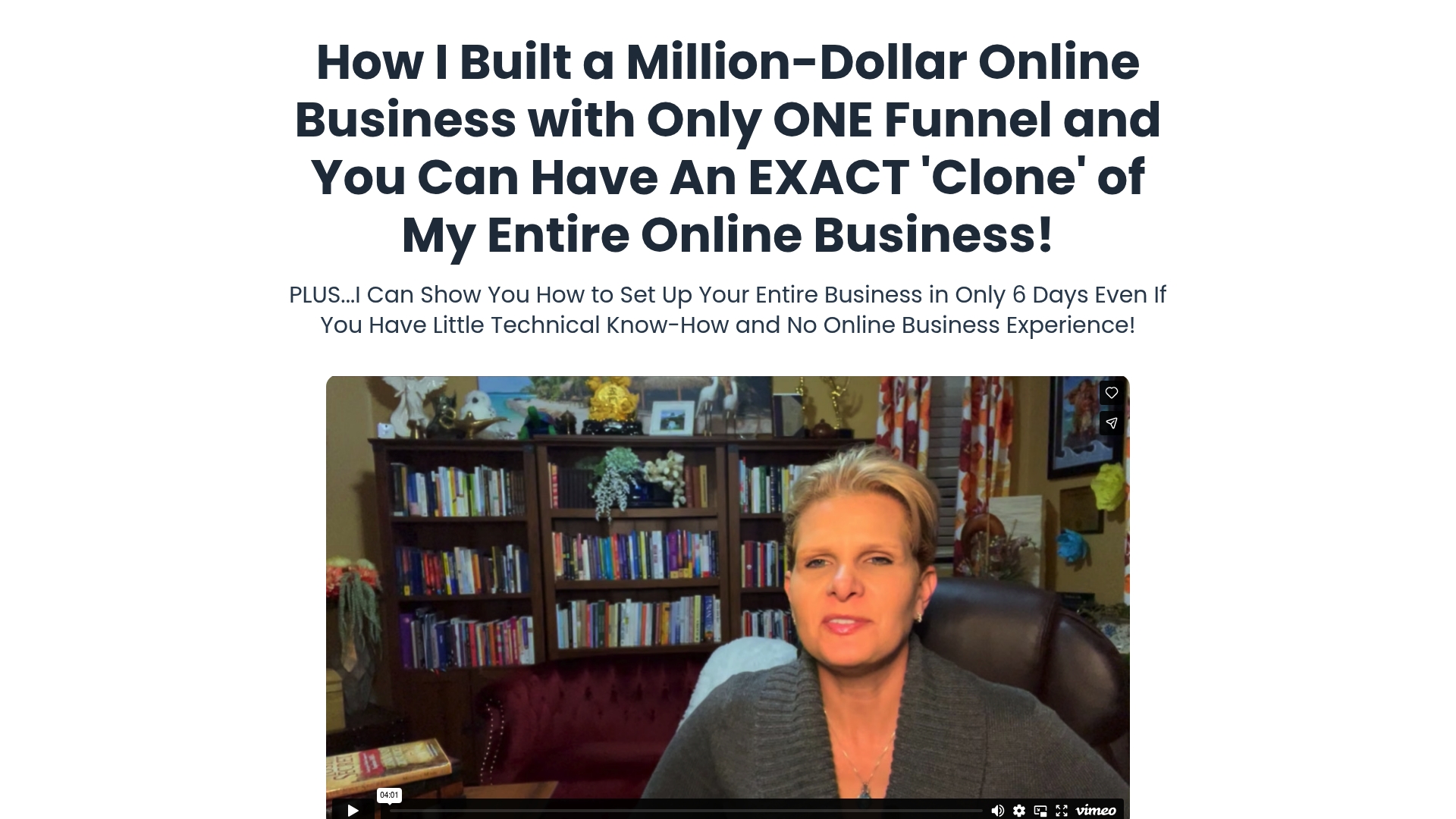
Reading a guide gets you oriented. Having a mentor walk you through each step gets you results. The Moneyfunnel 6-Day Mentorship Program is built specifically for people who are serious about launching an online business and want a proven system rather than trial and error. Over six days, you get step-by-step coaching that covers the exact setup, validation, and sales funnel strategies covered in this guide. Spots are limited to keep the mentorship personal and focused. If you are ready to stop planning and start building, this is where to go next.
FAQ
How long does it take to make money online?
Most online sellers see their first profit between months 3 and 6. Results depend on your business model, niche, and how consistently you execute.
What is the easiest online business to start as a beginner?
Freelancing is the fastest path to income because you monetize skills you already have with almost no startup cost. Digital products and affiliate marketing take longer but scale more passively over time.
Do I need an LLC to start an online business?
No. You can start as a sole proprietor, which requires no formal registration in most states. An LLC becomes worth considering once you have consistent revenue or are selling products with liability risk.
How do I get an EIN for my online business?
Apply directly on the IRS website for free. The process takes under ten minutes and you receive your EIN immediately. Never pay a third-party service to do this for you.
What are the first steps to launch an online business?
Choose a business model that fits your skills and budget, validate your idea with a landing page before building anything, handle your legal setup (EIN and business bank account), and start selling on a marketplace before investing in your own website.