
Online courses are a flexible, accelerated, and cost-effective way to build new skills and advance your career without putting your life on hold. The reasons to choose online courses go far beyond convenience. Modern platforms now use AI-driven personalization, discussion forums, and structured learning paths to deliver results that rival traditional classrooms. Whether you want to switch careers, earn more, or simply grow your knowledge, online education gives you a direct path forward on your own schedule.
Why choose online courses over traditional education?
Online learning, the formal term for digitally delivered education, gives you control that a fixed classroom schedule never can. You study when it fits your life, not when a university timetable says so. That single shift changes everything for working adults, parents, and anyone juggling multiple responsibilities.
The advantages of online learning stack up fast:
- Flexibility: Study at 6 a.m. before work or 11 p.m. after the kids are in bed. No fixed location required.
- Accessibility: Thousands of courses in marketing, coding, design, finance, and more are available on demand.
- Cost savings: Online education reduces costs by eliminating commuting, housing, and often lowering per-credit tuition. That means more money stays in your pocket.
- Work-life-study balance: You keep your job and income while you learn, which removes the financial pressure that stops many people from going back to school.
- AI personalization: AI-driven learning paths provide tailored tracking, feedback, and lesson suggestions based on your actual performance. You stop wasting time on material you already know.
The pros of online courses are not just about saving money or time. They are about gaining real control over your own development. A working professional in Chicago can take a digital marketing course built by an instructor in New York without relocating, commuting, or requesting time off.
Pro Tip: Block a specific two-hour window each day for study, just as you would a work meeting. Treating your course time as non-negotiable is the single fastest way to finish on schedule.
How do online courses accelerate learning and career advancement?
Speed is one of the most underrated reasons for online education. Skill-focused online programs complete in 3–6 months, compared to two to four years for a traditional degree. That gap matters enormously when you want to change careers or qualify for a promotion now, not years from now.
The path from enrollment to employment moves faster for three reasons:
- Focused curriculum. Online courses cut the general education requirements that pad traditional degrees. Every lesson connects directly to the skill you are building.
- Earn while you learn. Flexible scheduling lets you keep your job while studying, so you reduce financial pressure and apply new skills at work in real time.
- Incremental progression. You start with foundational courses to build confidence and platform familiarity, then advance to specialized topics. This path reduces overwhelm and keeps momentum high.
Consider a freelance copywriter who takes a six-week sales funnel course. Within two months, she lands her first paid client using the exact framework she studied. That outcome is not unusual. Online learners who apply skills immediately during a course consistently report faster career results than those who wait until graduation to start practicing. If you want to understand how online business success connects to faster skill acquisition, the pattern is clear: shorter learning cycles create faster feedback loops, and faster feedback loops build real competence.
What soft skills do online courses actually build?

Most people focus on the technical content of a course. The soft skills that online learning builds quietly in the background are just as valuable to employers and clients.
Online courses build time management, self-motivation, and decision-making because students chart their own course without a professor watching over them. These are the exact traits that separate high performers in any workplace. You do not get a reminder to submit your assignment. You create your own deadline system and stick to it.
Online discussion forums add another layer of development. Forums produce higher-quality engagement than in-person classroom discussions because students have time to research, think, and write well-considered responses instead of blurting out the first thing that comes to mind. That habit of deliberate communication transfers directly to professional writing, client emails, and team collaboration.
"Online learning is ideal for developing self-motivation and time management, both of which are crucial for professional success." — ECPI University
The challenge is that online learning shifts structure from instructor to student. Without fixed class times, procrastination becomes a real risk. The students who succeed treat their course like a part-time job with real deadlines.
Pro Tip: Build a digital study group using Slack, Discord, or a WhatsApp group with two or three fellow learners. Peer accountability replicates the social pressure of a classroom and dramatically improves completion rates.
Online courses vs. traditional classes: which is right for you?
The honest answer is that neither format wins across every category. The right choice depends on your goals, personality, and current life situation.
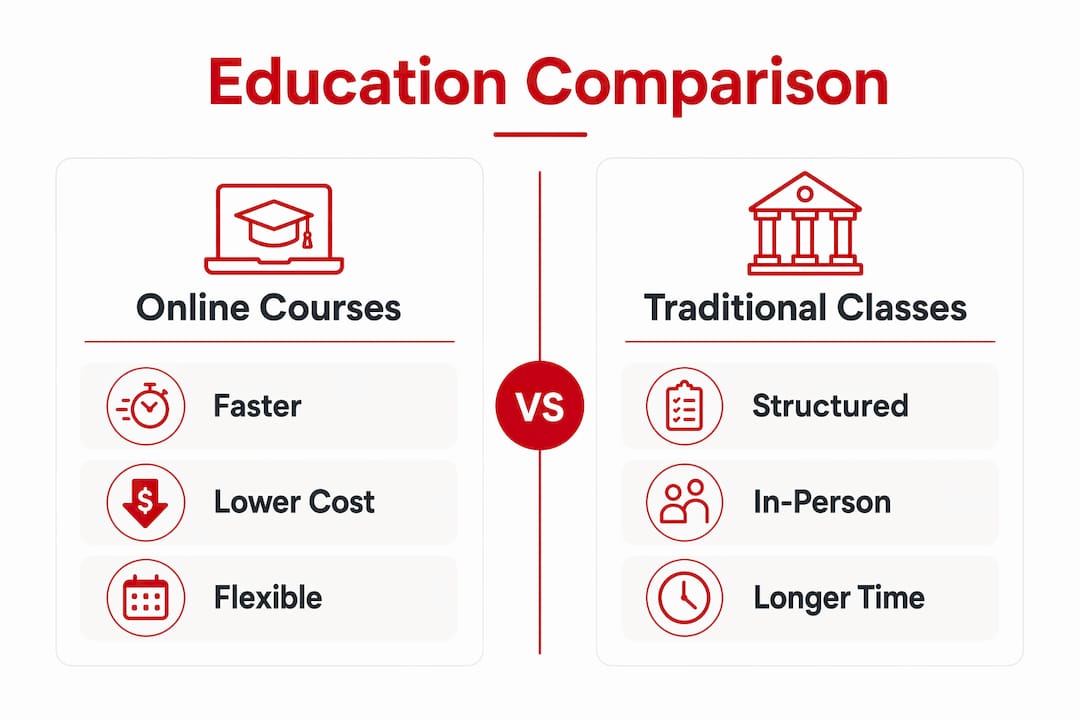
| Category | Online courses | Traditional in-person classes |
|---|---|---|
| Cost | Lower: no housing, no commute, often lower tuition | Higher: tuition, housing, transportation, meal plans |
| Flexibility | Study anytime, anywhere | Fixed schedule, fixed location |
| Engagement | Asynchronous forums, AI feedback | Live discussion, immediate instructor response |
| Social experience | Digital networking, self-built study groups | Campus community, in-person relationships |
| Completion speed | 3–6 months for focused programs | 2–4 years for degree programs |
| Best for | Self-driven learners balancing work and family | Full-time students who thrive in structured environments |
The best learning environment depends on personality. Online courses favor self-driven learners who balance multiple commitments. Traditional classes suit students who need external structure and daily face-to-face interaction to stay on track.
The cost difference is significant. Online learning costs less overall because savings on housing, commuting, and flexible course options compound over time. A learner who avoids two years of campus housing and daily commuting saves a substantial amount, even before comparing tuition rates.
For working professionals, the choice is rarely close. Keeping your income, applying skills in real time, and finishing in months rather than years makes online education the practical winner for most career development goals. If you are exploring online entrepreneurship options, the flexibility of online courses is especially relevant.
Key Takeaways
Online courses are the most practical path to skill development for working adults because they combine speed, cost savings, and real-world application in a format that fits around your existing life.
| Point | Details |
|---|---|
| Faster completion | Focused online programs finish in 3–6 months, far faster than traditional degrees. |
| Lower total cost | Eliminating commuting, housing, and high tuition makes online learning more affordable. |
| Soft skill development | Online study builds time management, self-motivation, and deliberate communication. |
| Better engagement quality | Discussion forums produce more thoughtful responses than spontaneous classroom answers. |
| Self-discipline is required | Students must create their own structure to avoid procrastination and finish strong. |
What I have learned from watching people choose online courses
Online learning suits busy professionals better than any other format. That is not a marketing claim. It is what I have observed consistently across learners who were juggling jobs, families, and side projects while trying to grow their skills.
The biggest mistake first-time online learners make is treating a course like a Netflix series. They start with enthusiasm, skip a few sessions when life gets busy, and quietly abandon it by week four. The fix is not willpower. It is structure. The learners who finish are the ones who schedule study time, find one accountability partner, and start with a foundational course before jumping into advanced material. Starting with foundational courses helps new online students adjust to learning management systems and study habits before tackling harder content.
The other thing I notice is that people underestimate how much the soft skills matter. Finishing a course on your own, without anyone pushing you, signals something real to employers and clients. It says you can manage yourself. That is a rare quality, and online education forces you to develop it whether you intend to or not.
My honest advice: pick one course, block the time, and treat the first two weeks as a test of your system, not your intelligence. If the system works, keep going. If it does not, adjust the schedule before you adjust your ambition.
— Mike
Ready to put your online learning to work?
Choosing online education is the first step. Applying what you learn to build real income is the next one. Moneyfunnel's 6-Day Money Funnel Mentorship is a practical program designed for people who want to move from learning to earning fast. The program covers the exact sales funnel system used to generate results, with step-by-step guidance and group mentorship built in.
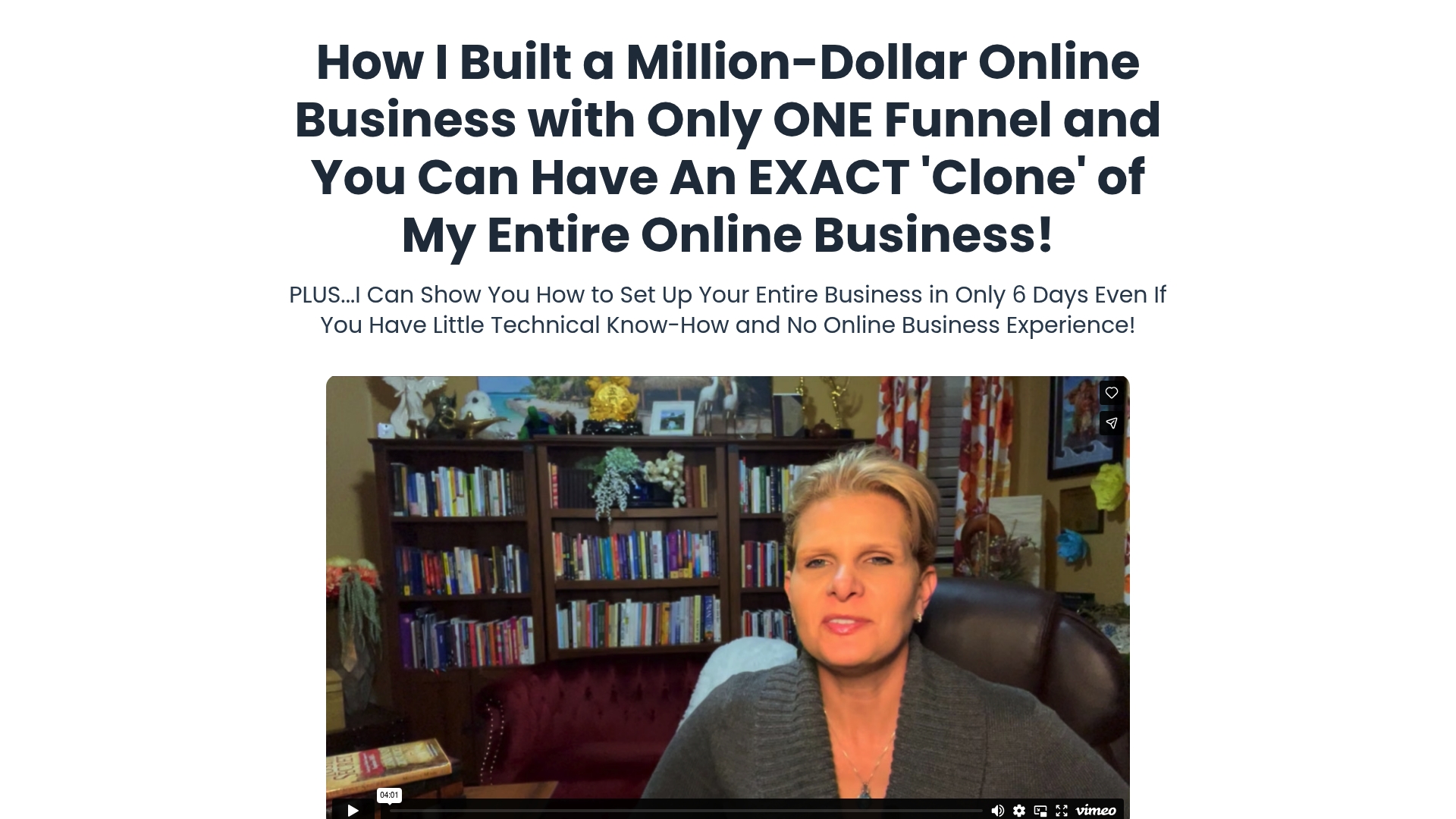
You do not need advanced technical skills or a marketing degree to start. Moneyfunnel provides the structure, the framework, and the support so you can focus on execution. If you are ready to turn new skills into a working online business, this is a direct path forward. Explore the mentorship program and see if it fits your goals.
FAQ
Why choose online courses over a traditional degree?
Online courses complete in 3–6 months and cost less by eliminating housing and commuting expenses. They let you keep your job and apply skills immediately, which accelerates real-world results.
Are online courses worth it for career advancement?
Yes. Online courses build both technical skills and soft skills like time management and self-motivation, which employers and clients value highly. The faster completion timeline also means you qualify for new roles sooner.
What soft skills do online courses develop?
Online courses develop time management, self-motivation, and decision-making because students manage their own schedules without instructor oversight. Discussion forums also build deliberate, evidence-based communication habits.
How do I succeed as a first-time online learner?
Start with a foundational course to build familiarity with the platform and your own study habits. Block fixed study times each day and find at least one accountability partner to maintain consistency.
Is online learning better for self-driven people?
Online learning favors self-driven learners who balance multiple commitments and can create their own structure. Learners who need daily external accountability often perform better in traditional classroom settings.