
Choosing the wrong online business model is one of the most expensive mistakes a new entrepreneur can make. You can pour months of effort into building something that was never designed to pay you quickly, or worse, something that collapses the moment an algorithm changes. The good news is that a handful of proven models consistently deliver fast revenue, strong margins, and real staying power in 2026. This article breaks down exactly how to evaluate your options, which models are leading the pack right now, and how to match the right model to your specific goals, skills, and timeline.
Table of Contents
- How to choose the best online business model
- Top 5 best online business models in 2026
- Comparison table: Strengths and weaknesses of each model
- Making the right choice: Which model fits your goals?
- Our take: Why hybrid models are the future and what most guides miss
- Ready to launch your online business? Get expert help
- Frequently asked questions
Key Takeaways
| Point | Details |
|---|---|
| Fastest income paths | Membership sites and digital products can generate sales within weeks at low cost. |
| Model comparison | SaaS and hybrid models are stronger for retention, but require more skill and effort. |
| AI/algorithm risks | Pure affiliate and content sites are vulnerable; blended models offer more stability. |
| Sales funnel leverage | Effective funnels accelerate results in nearly every online business model. |
| Personal fit matters | Choose the model that matches your capital, skills, and long-term goals. |
How to choose the best online business model
With a clear understanding of why picking the right model matters, let's break down the exact criteria you should consider before committing to any path.
Not all online businesses are created equal. Some are designed for fast cash flow. Others build slowly but produce compounding, long-term income. The smartest entrepreneurs evaluate every model against a short list of non-negotiable factors before they invest a single dollar or hour.
Here are the core criteria you should use:
- Startup cost: How much money do you need to launch and sustain the business before it becomes profitable? Lower startup costs reduce your financial risk and allow you to test faster.
- Time to first revenue: How many weeks or months before you see real income? Some models can generate income within days. Others take six to twelve months.
- Gross margin: What percentage of each sale do you actually keep after direct costs? High-margin models (70%+) give you more room to reinvest and grow.
- Complexity: How much technical skill, team building, or infrastructure does the model require? Complex models are harder to launch solo.
- Churn risk: For recurring revenue models, how likely are customers to cancel? High churn destroys the compounding effect of subscriptions.
- AI and algorithm vulnerability: Is your traffic or revenue dependent on a platform, search engine, or algorithm that could shift overnight?
The tradeoffs here are real. A coaching business can generate income fast but doesn't scale without your direct time. SaaS scales beautifully but requires months of product development and a longer sales cycle. Membership sites and digital products offer an attractive middle ground, with low startup costs and fast paths to revenue, but you have to manage churn and market saturation carefully.
As research confirms, membership sites and digital products offer high gross margins with low startup costs and quick time to first revenue measured in weeks, though they carry real risks of churn and commoditization as more creators flood the same niches.
Pro Tip: Focus on models with simple sales funnels and digital delivery. The fewer moving parts between your offer and a customer's credit card, the faster you get paid. Complexity is the enemy of speed.
Top 5 best online business models in 2026
With selection criteria set, here are the specific models leaders and experts recommend for 2026.

1. Membership sites
Membership sites charge a recurring fee, weekly, monthly, or annually, in exchange for ongoing access to content, community, tools, or coaching. The recurring revenue model creates predictable cash flow that compounds over time.
- Best for: Creators, educators, coaches, and niche community builders
- Startup cost: Low (platform fees, basic content creation)
- Time to first revenue: Weeks
- Gross margin: Very high (80%+)
- Main risk: Member churn if content value drops
The key to a successful membership site is consistent value delivery. Members who feel they are getting more than they pay for stay. Those who feel the content has gone stale cancel. Retention strategy is not optional here. It is the entire business.
2. Digital products and online courses
Selling digital products, ebooks, templates, courses, and toolkits, is one of the fastest ways to generate online income with almost zero ongoing cost per sale. Once you create the product, it sells repeatedly without additional labor. High gross margins and low startup costs make this model especially attractive for first-time entrepreneurs.
- Best for: Experts, educators, and creators with a specific skill or knowledge base
- Startup cost: Very low
- Time to first revenue: Days to weeks with the right funnel
- Gross margin: 85 to 95%
- Main risk: Market saturation and commoditization
3. Software as a Service (SaaS)
SaaS products charge users a recurring subscription for access to software tools. Think project management platforms, email marketing tools, or AI-powered apps. The scalability is exceptional, but so is the complexity. SaaS benchmarks in 2026 show enterprise annual churn running at 5 to 10%, mid-market churn at 10 to 20%, a median LTV to CAC ratio of 3 to 4:1, and enterprise net revenue retention hitting 112%, with CAC payback under 12 to 18 months for enterprise customers.
- Best for: Technical founders or teams with development resources
- Startup cost: High (development, infrastructure, support)
- Time to first revenue: Months
- Gross margin: High (70 to 85%)
- Main risk: High churn in early stages, long sales cycles
4. Coaching and consulting
Selling your expertise directly to clients through one-on-one or group coaching is one of the fastest paths to significant income. You can charge premium prices from day one, and you need almost no infrastructure to start.
- Best for: Experienced professionals with proven results in a specific field
- Startup cost: Near zero
- Time to first revenue: Days to two weeks
- Gross margin: Very high (90%+)
- Main risk: Time-for-money trap. Revenue stops when you stop working.
Pro Tip: Pair coaching with a digital product or membership to create a hybrid model. This lets you scale income without scaling your hours at the same rate.
5. Hybrid service-content sites (the under-the-radar winner)
This is the model most guides overlook. A hybrid site combines content marketing (SEO articles, YouTube, newsletters) with a direct service or recurring offer. Instead of relying on affiliate commissions from a third party, you own the relationship and the revenue. Building profitable sales funnels into a hybrid site creates multiple income streams that reinforce each other.
- Best for: Content creators who also have a service, product, or community to offer
- Startup cost: Low to medium
- Time to first revenue: Weeks to months
- Gross margin: High
- Main risk: Requires consistent content production and audience building
A word of caution on pure affiliate sites: Affiliate content sites have seen traffic declines of 20 to 75% following AI-driven search changes. Building a business entirely on affiliate commissions and search traffic is now one of the riskiest strategies in the online space. Diversification is not optional. It is survival.
Comparison table: Strengths and weaknesses of each model
To make selection even easier, see how these models stack up side by side on the factors that matter most.
| Business Model | Startup Cost | Time to Revenue | Gross Margin | Churn Risk | AI Vulnerability |
|---|---|---|---|---|---|
| Membership sites | Low | Weeks | 80 to 90% | Medium | Low |
| Digital products/courses | Very low | Days to weeks | 85 to 95% | Low | Medium |
| SaaS | High | Months | 70 to 85% | Medium to high | Low |
| Coaching/consulting | Near zero | Days | 90%+ | Low | Very low |
| Hybrid service-content | Low to medium | Weeks to months | High | Low | Low |
| Pure affiliate sites | Low | Months | Medium | N/A | Very high |
A few numbers from this table deserve special attention. SaaS churn benchmarks show mid-market businesses losing 10 to 20% of revenue annually to cancellations, which means you need strong acquisition just to stay flat. That is a critical number to understand before choosing SaaS as your first business.
On the other end, membership and digital product models offer the fastest path from launch to income, with very low startup costs and margins that most traditional businesses would envy. The catch, as the table shows, is that commoditization and churn are real threats you must manage actively.
Pure affiliate sites sit at the bottom for AI vulnerability. This is not a minor concern. It is a business-ending risk for anyone who builds their entire income on search traffic and third-party commission structures.
Making the right choice: Which model fits your goals?
With the strengths and risks now clear, let's figure out what matches your situation and goals best.
The right model depends on four variables: how fast you need income, how much capital you can invest, what skills you already have, and how you plan to reach your audience. Here is a simple numbered guide to narrow it down:
-
If you need income within 30 days: Start with coaching or consulting. You can sell your expertise directly to clients with nothing more than a calendar booking link and a way to collect payment. No product, no website, no tech skills required. Once you have cash flow, reinvest into building a digital product or membership.
-
If you have a skill or knowledge base and 60 to 90 days: Build a digital product or mini-course. Pair it with a simple email funnel and a small social media presence. You can realistically generate your first sale within weeks of launching.
-
If you want recurring, predictable revenue: Build a membership site around a specific transformation or community. Define clearly what members get each month and commit to delivering it consistently. Churn will kill you if you stop showing up.
-
If you have technical skills or a development budget: SaaS is the highest-ceiling model available. But go in knowing that pure affiliate content strategies are far more vulnerable to AI disruption than niche-focused, high-retention SaaS products. Build for lifetime value from day one.
-
If you want long-term resilience: Go hybrid. Combine content with a service or product offer, build an email list you own, and create multiple revenue streams that support each other. This is the model least likely to collapse when a platform changes its rules.
Three common decision mistakes to avoid:
- Chasing trends: Building around what is popular right now rather than what solves a real, recurring problem. Trends fade. Problems persist.
- Ignoring churn: Focusing entirely on new customer acquisition while your existing customers quietly cancel. Retention is the real growth lever.
- Underestimating retention costs: Thinking that getting a customer is the hard part. Keeping them is equally hard and far more valuable over time.
Our take: Why hybrid models are the future and what most guides miss
Most online business guides are written to rank on Google, not to give you the uncomfortable truth. Here it is: the era of building a single-channel, single-revenue-stream online business and expecting it to survive long-term is effectively over.
We have watched pure content sites lose the majority of their traffic overnight when search algorithms shifted to favor AI-generated summaries. We have seen affiliate marketers who were earning six figures find their income cut in half within a single quarter. The pattern is consistent and predictable. Businesses built on someone else's platform, algorithm, or commission structure are fragile by design.
"The experts who are still winning in 2026 are not the ones who found the best affiliate program. They are the ones who built niche-focused hybrid businesses with diversified revenue and high customer lifetime value through strong retention strategies."
What most guides also miss is the power of the email list as the connective tissue of a hybrid model. When you own your audience, an algorithm change is an inconvenience, not a catastrophe. Your list is the one asset no platform can take from you.
The smartest move in 2026 is to pick a model that generates income fast (coaching, digital products) and immediately start building the infrastructure for recurring revenue and owned audience growth. You do not have to choose between speed and durability. You build one to fund the other.
Ready to launch your online business? Get expert help
If you're serious about taking what you've learned and turning it into a thriving online business, here's an accelerated path to launch.
Understanding the theory is one thing. Executing it quickly, without wasting months on trial and error, is where most aspiring entrepreneurs get stuck. The 6-Day Money Funnel Mentorship is designed specifically for people who want a structured, step-by-step path to building a profitable online business fast, even with no prior technical experience. The program draws on real experience generating over $10 million through a single proven funnel system and walks you through the exact setup process in just six days.
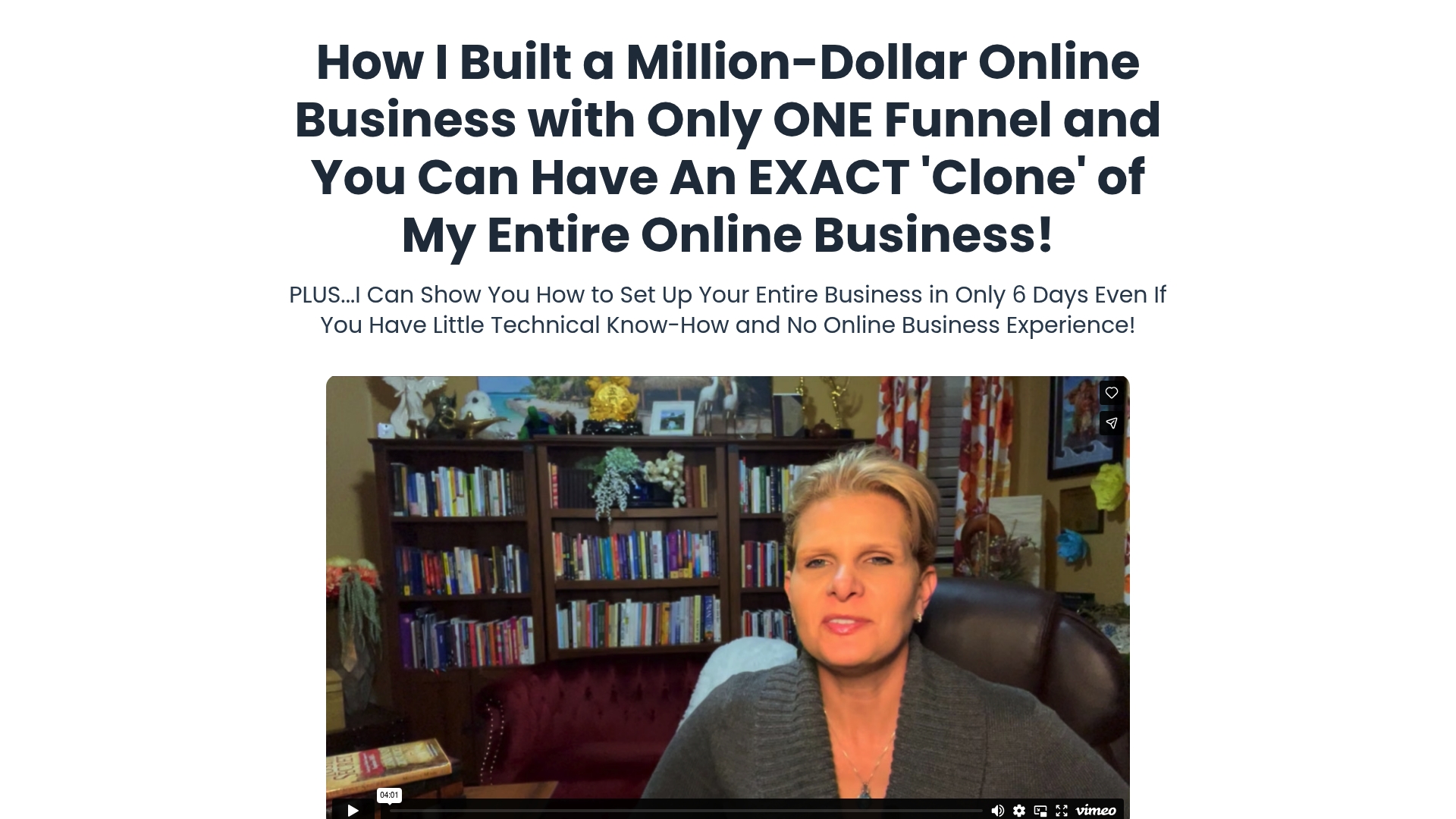
Spots in the mentorship are intentionally limited to keep the group experience focused and high quality. If you are ready to stop researching and start building, this is the most direct route from where you are now to a running, revenue-generating online business.
Frequently asked questions
What is the fastest online business model to start?
Digital products and small membership sites can generate income within weeks due to low startup barriers and high gross margins with minimal upfront investment. Coaching is even faster if you have an existing skill set and can reach potential clients directly.
Are affiliate sites still a good model in 2026?
Pure affiliate and content sites carry significant risk in 2026 because affiliate sites have declined 20 to 75% following AI-driven search changes. Hybrid models with diversified revenue streams are a far safer and more resilient choice.
What's the most scalable online business type?
SaaS offers the highest scalability ceiling, but it requires technical resources and a strong focus on retention. Enterprise SaaS benchmarks show a median LTV to CAC ratio of 3 to 4:1, which means the economics can be exceptional when churn is controlled.
How do I lower churn and increase revenue?
Blending services, content, and community into a hybrid model naturally improves retention and increases customer lifetime value over time. Niche-focused hybrid businesses consistently outperform single-channel models on both retention and long-term revenue stability.