
Website monetization is the process of generating revenue from your site through advertising, affiliate marketing, product sales, memberships, and sponsored content. The right method depends on your traffic volume, niche authority, and how much trust your audience places in you. Knowing how to monetize a website effectively means matching your strategy to where your site actually stands today, not where you hope it will be. Global ad spend is on track to approach $1 trillion in 2025, which signals enormous demand for web-based inventory. The opportunity is real. The question is which path fits your site.
How to monetize a website: the main methods explained
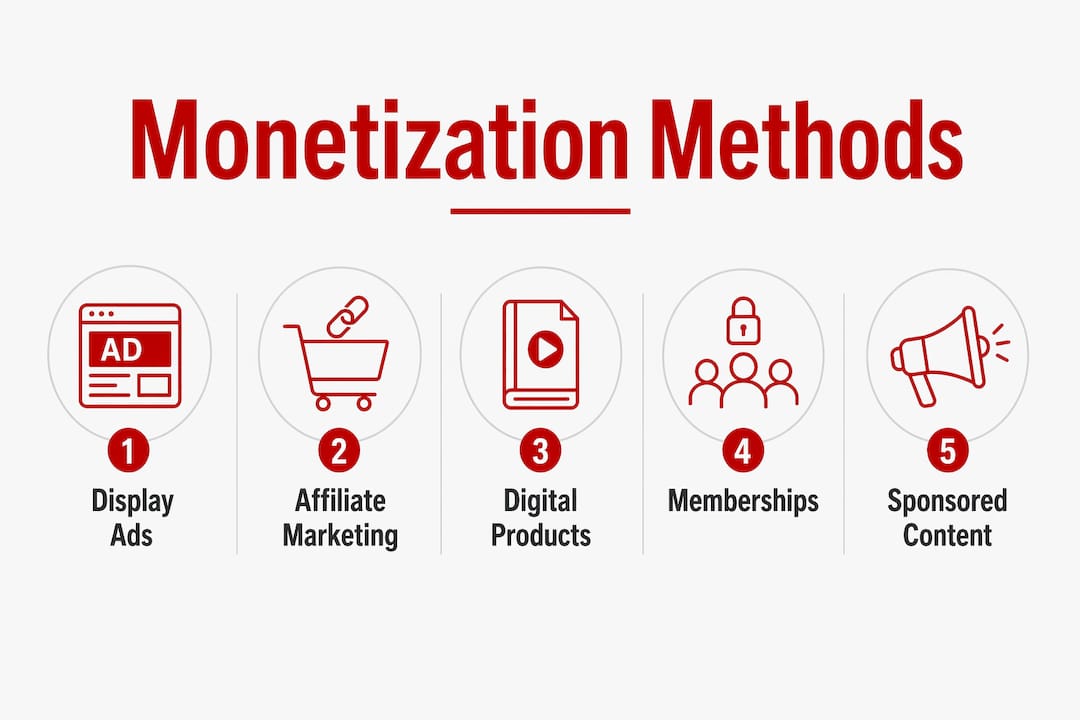
Website monetization falls into five core categories. Each works differently and suits different site types.
Display advertising places banner and video ads on your pages through networks like Google AdSense or programmatic platforms. You earn based on impressions (CPM) or clicks (CPC). This method works best for high-traffic, general-interest sites where visitors browse rather than buy.

Affiliate marketing pays you a commission when a visitor clicks your link and completes a purchase on a partner site. You earn nothing upfront. You earn every time someone converts. This model rewards content that targets buyers at the decision stage, such as product reviews, comparison guides, and "best of" lists. For a closer look at what this looks like in practice, see these affiliate marketing examples that generate real income.
Selling digital products means you create an asset once and sell it repeatedly. Digital products like ebooks and courses offer scalable, repeatable income because there is no inventory cost and no fulfillment limit. A $97 course sold to 500 people generates $48,500 with no shipping, no warehouse, and no restocking.
Memberships and subscriptions charge readers for premium access, exclusive content, or community features. A membership model supplies predictable, recurring revenue that display ads simply cannot match. Predictability matters when you are planning content production or hiring.
Sponsored content and direct ad sales involve brands paying you to publish posts, reviews, or placements on your site. This method requires an established audience and a clear niche. Rates are negotiated directly, so your leverage grows with your domain authority and reader engagement.
Which method matches your traffic, niche, and authority?
Not every monetization method fits every site. Choosing the wrong one wastes months of effort.
The table below maps site profile to the most effective revenue approach:
| Site profile | Best monetization match |
|---|---|
| High traffic, broad niche | Display ads, programmatic advertising |
| Buyer-intent content, mid-traffic | Affiliate marketing, CPA offers |
| Expert authority, loyal audience | Courses, consulting, premium memberships |
| Engaged community, niche focus | Subscriptions, sponsored content |
| New site, low traffic | Affiliate marketing, digital products |
Experienced publishers earn 5–10 times higher margins through affiliate marketing and digital product sales than through basic ad revenue alone. That gap exists because authority-based methods capture audience trust, not just eyeballs.
Matching monetization to audience trust and intent is the single most important decision you will make. A finance blog with readers actively researching investment accounts will convert affiliate links at a far higher rate than a general lifestyle blog with similar traffic numbers.
Pro Tip: Before picking a method, run a quick audit of your top 10 pages. If most of them target informational queries, start with display ads. If most target buying decisions, affiliate marketing will outperform ads immediately.
Diversification protects your income. Combining advertising, subscription models, and affiliate partnerships creates stable revenue that absorbs algorithm changes and ad market swings. A site earning from three sources survives a Google update that wipes out one of them.
Step-by-step guide to setting up each monetization method
Display ads and header bidding
- Apply for Google AdSense or a premium ad network once your site reaches consistent monthly traffic.
- Place ad units in high-visibility positions: above the fold, within content, and at the end of articles.
- Once approved by a premium network, implement header bidding. Header bidding increases CPMs by 20–50% compared to traditional waterfall setups by letting multiple demand sources bid simultaneously.
- Test ad density carefully. More ads do not always mean more revenue. Too many units increase page load time and reduce session duration, which lowers overall CPM.
Many new site owners lose revenue by skipping header bidding and staying on basic waterfall configurations. The technical setup takes a few hours and pays back immediately.
Affiliate marketing setup
- Identify your top buyer-intent pages using Google Search Console. Look for pages ranking for "best," "review," or "vs." queries.
- Join affiliate programs relevant to your niche. Amazon Associates, ShareASale, CJ Affiliate, and Impact are widely used starting points.
- Add affiliate links naturally within existing content. Forced placements reduce click-through rates.
- Build a dedicated resources or tools page that aggregates your top recommendations. These pages convert at high rates because visitors arrive with clear intent.
- Track performance monthly. Drop programs with low conversion rates and double down on those that convert.
For proven tactics to scale this channel, the guide on growing affiliate income covers advanced methods worth applying once your baseline is set.
Pro Tip: Affiliate marketing is not passive income at the start. Significant upfront content creation and traffic growth are required before commissions become consistent. Plan for six to twelve months of content investment before expecting reliable returns.
Digital products and courses
| Product type | Effort to create | Revenue potential | Best for |
|---|---|---|---|
| Ebook | Low | Moderate | Any niche with clear pain points |
| Online course | High | High | Expert-authority sites |
| Templates or tools | Medium | High | Design, finance, marketing niches |
| Webinar series | Medium | High | Coaching and consulting audiences |
Create your first product around the question your audience asks most. Survey your email list or check your most-commented posts. Build the product to answer that question completely.
Memberships and subscriptions
Set up a membership using platforms like Patreon, Memberful, or a native WordPress plugin. Define clearly what members get that free readers do not. Exclusive content, early access, community access, and live Q&A sessions all justify a monthly fee. Price your entry tier low enough to reduce friction, then offer a higher tier for your most engaged readers.
Sponsored content and direct ad sales
Build a media kit that lists your monthly traffic, audience demographics, and engagement rates. Reach out to brands that already advertise in your niche. A direct placement typically pays three to five times more than the same impression sold through a programmatic network.
What are the most common monetization mistakes to avoid?
Most site owners hit the same walls. Knowing them in advance saves months of lost revenue.
- Single-source dependency. Relying on one revenue stream makes your income fragile. An ad network policy change or an affiliate program closing can eliminate your income overnight.
- Ignoring traffic quality. Ten thousand monthly visitors who never buy anything generate less affiliate revenue than one thousand visitors actively researching purchases.
- Misreading SEO signals. Ranking for informational keywords does not automatically translate to affiliate commissions. You need buyer-intent content to drive conversions.
- Poor ad placement. Ads placed below the fold or in low-attention zones generate minimal CPM. Test placement aggressively in the first 90 days.
- Neglecting audience trust. Recommending low-quality products for higher commissions destroys the credibility that makes affiliate marketing work.
"The biggest monetization mistake is treating your website as a billboard instead of a business. A billboard sells space. A business builds relationships that generate revenue across multiple channels over time."
Balancing monetization with user experience is not optional. Readers who feel bombarded by ads or irrelevant promotions leave and do not return. Every monetization decision should pass a simple test: does this make the site more or less useful to the reader?
Key Takeaways
Effective website monetization requires matching your revenue method to your traffic volume, audience intent, and authority level, not applying a single strategy to every site.
| Point | Details |
|---|---|
| Match method to site profile | Display ads suit high-traffic broad sites; affiliate marketing suits buyer-intent content. |
| Header bidding lifts ad revenue | Switching from waterfall to header bidding increases CPMs by 20–50%. |
| Digital products scale without limits | Build once and sell repeatedly with no inventory or fulfillment costs. |
| Diversify revenue streams | Combining ads, affiliates, and products protects income from single-source failures. |
| Trust drives conversion | Recommending products your audience trusts generates far higher affiliate returns than volume alone. |
What I've learned after years of watching sites monetize the wrong way
Most people approach website monetization backwards. They build traffic first and think about revenue second. That sequence sounds logical, but it creates a site full of content that was never designed to convert.
The sites I have seen generate the most consistent income share one trait: they were built with a specific reader in mind and a specific outcome for that reader. Every piece of content serves a purpose in moving that reader toward a decision. That is not a content strategy. That is a marketing funnel applied to a website.
The other mistake I see constantly is chasing the highest-commission affiliate programs regardless of fit. A $200 commission on a product your audience does not need will never outperform a $20 commission on a product they buy every year. Fit beats payout every time.
My honest advice: pick two monetization methods that match your current traffic and authority level. Execute them well for six months before adding a third. Spreading across five methods from day one means doing all of them poorly. Depth beats breadth until you have the systems to support both.
Treat your site as a long-term digital asset. The sites earning serious income in 2026 were built with patience, not shortcuts. The revenue compounds when the content, the audience, and the monetization method all point in the same direction.
— Mike
Moneyfunnel's mentorship for faster monetization results
Building a monetized website without guidance means learning every lesson the expensive way.

Moneyfunnel's 6-Day Mentorship Program walks you through selecting the right monetization strategy for your specific site, setting it up correctly, and avoiding the pitfalls that stall most new publishers. The program covers strategy selection, content alignment, and revenue optimization in a structured six-day format designed for people who want results without months of trial and error. Spots are limited to keep the mentorship focused and personal. If you are serious about turning your site into a real income source, this is the most direct path to getting there.
FAQ
What is website monetization?
Website monetization is the process of generating revenue from a website through methods like display advertising, affiliate marketing, digital product sales, memberships, and sponsored content.
How much traffic do I need before monetizing?
Display ads require substantial traffic to generate meaningful income, but affiliate marketing and digital products can generate revenue with a smaller, highly targeted audience focused on buying decisions.
What is the fastest way to start earning from a website?
Affiliate marketing is the fastest entry point because it requires no product creation. Join a relevant affiliate program, add links to existing buyer-intent content, and track conversions from day one.
Why does header bidding increase ad revenue?
Header bidding lets multiple ad networks bid simultaneously on your inventory rather than sequentially. That competition drives up the price per impression, which is why CPMs rise by 20–50% compared to waterfall setups.
How do I increase website revenue over time?
Diversify across at least two or three revenue streams, improve content targeting toward buyer-intent queries, and test ad placement and affiliate offers regularly to find what converts best for your specific audience.