
Types of online income streams are best understood as four distinct earning models: service-based, content-based, product-based, and remote employment, each with a different mechanism for how money flows to you. Choosing the wrong model for your skills and schedule is the single biggest reason people stall out before earning a dollar. This guide breaks down each online income model by how it works, what it demands, and who it suits best. You will also find tax basics and scam warnings that most articles skip entirely.
1. Types of online income streams: the four-model framework
The clearest way to understand digital income opportunities is to ask one question: what are you actually selling? Service-based income sells your time and skill. Content-based income sells audience attention. Product-based income sells a repeatable asset. Remote employment sells your labor to one employer. This four-part framework, drawn from how money actually flows in each model, removes the confusion that comes from treating every "make money online" idea as interchangeable. Knowing which category you are in tells you what to build, who pays you, and how long it takes to see results.
2. Service-based income streams: sell your skills directly
Service-based income is defined as earning money by delivering a skill or service directly to a paying client. Freelance writing, graphic design, virtual assistance, consulting, and online tutoring all fall here. Platforms like Upwork and Fiverr connect you with clients quickly, and payment typically arrives via direct deposit, PayPal, or ACH transfer within days of completing work.

The main advantages are speed and low startup cost. You can land a first client within a week if you have a marketable skill. The trade-off is income variability. No clients means no income, and client acquisition takes consistent effort.
Tax compliance matters from day one. Self-employment income over $400 must be reported on Schedule C (Form 1040) in the US. Freelancers also file Schedule SE to calculate self-employment tax when net earnings exceed that threshold. Setting up a simple spreadsheet to track invoices and expenses monthly prevents a painful scramble at tax time.
- Best for: People with a defined skill ready to monetize immediately
- Platforms: Upwork, Fiverr, Toptal, direct client outreach
- Income timeline: Days to weeks
- Key risk: Client concentration and income gaps between projects
Pro Tip: Use invoicing tools like FreshBooks or Wave to track payments and generate professional invoices. Clients pay faster when the process is frictionless, and you will have clean records for Schedule C.
3. Content-based income streams: build an audience, then monetize it
Content-based income is earned when an audience engages with your material and advertisers, sponsors, or affiliate partners pay for that attention. Blogging monetized through Google AdSense, YouTube channels earning CPM ad revenue, and podcast sponsorships are the clearest examples. The revenue model is indirect: you create content, build an audience, and then layer on monetization through ads, affiliate commissions, or platforms like Patreon.
The scalability here is real. A single YouTube video or blog post can generate revenue for years after publication. That is the time-first model in action: you invest heavily upfront and collect returns over time. The challenge is that passive income models require patience. Most content creators see negligible revenue for the first six to twelve months.
Authenticity risk is underrated. Audiences detect when a creator prioritizes monetization over genuine value, and trust, once lost, is nearly impossible to rebuild. Ad reliance is also fragile. Google algorithm updates have wiped out entire blogs overnight.
- Best for: Communicators, educators, and niche experts willing to play a long game
- Platforms: YouTube, Medium, Substack, Spotify for podcasters
- Income timeline: Months to years
- Key risk: Algorithm dependency and slow audience growth
Pro Tip: Diversify content monetization strategies across ads, affiliate links, and direct memberships. Relying on one revenue source inside a content business is as risky as relying on one client in a service business.
4. Product-based income streams: create once, sell repeatedly
Product-based income is generated by selling a digital asset that requires no additional labor per sale. Ebooks sold on Amazon Kindle, online courses hosted on Udemy or Teachable, design templates on Creative Market, and software tools all fit this model. The profit margins are high because there is no physical inventory and no per-unit production cost after the initial build.
This is the model most associated with residual income ideas, and for good reason. A well-built course on Teachable can generate sales for three to five years with minimal updates. The catch is the front-loaded effort. Creating a quality course or software product takes weeks or months of focused work before a single dollar arrives.
Marketing and distribution are where most product creators underestimate the challenge. Building the product is only half the job. Getting it in front of buyers requires SEO, paid ads, email lists, or affiliate partnerships. Print-on-demand services like Printful reduce the barrier for physical product variants, but digital products remain the highest-margin option for solo creators.
- Best for: Skill-rich individuals who can invest time upfront for long-term returns
- Platforms: Udemy, Teachable, Amazon Kindle Direct Publishing, Gumroad
- Income timeline: Weeks to months before first sale; years of residual returns
- Key risk: Product obsolescence and market saturation in popular niches
Pro Tip: Validate your product idea before building it. Sell a beta version or pre-order to ten people before investing sixty hours in production. Real buyer behavior beats any survey.
5. Remote employment: the stable online income option
Remote employment is defined as a traditional salaried or hourly job performed from a home office or any location with internet access. It differs from freelancing in one critical way: you have one employer, a fixed schedule, and a W-2 tax form rather than 1099s. Your employer withholds taxes, which removes the quarterly estimated tax burden that freelancers carry.
The industries most active in remote hiring include software development, customer service, digital marketing, and technical support. Companies like GitLab, Automattic, and Zapier operate as fully remote organizations and post roles regularly on platforms like We Work Remotely and Remote.co.
The trade-off is autonomy. Remote employees trade flexibility for predictability. You get a reliable paycheck, health benefits in many cases, and a clear career path. You do not get to set your own rates or choose your projects. For people who want financial stability without the uncertainty of building an audience or client base, remote employment is the most direct path.
- Best for: People who want predictable income and employer-provided benefits
- Platforms: We Work Remotely, Remote.co, LinkedIn, FlexJobs
- Income timeline: Immediate upon hire
- Key risk: Limited income ceiling and dependence on a single employer
6. How to compare and choose between income stream types
Choosing the right model comes down to three variables: your current skills, your available time, and how quickly you need income. The table below maps each model against the criteria that matter most.
| Model | Time to first income | Scalability | Effort type | Risk level |
|---|---|---|---|---|
| Service-based | Days to weeks | Low to medium | Active, ongoing | Medium |
| Content-based | Months to years | High | Front-loaded, then passive | Medium to high |
| Product-based | Weeks to months | High | Front-loaded, then passive | Medium |
| Remote employment | Immediate | Low | Active, ongoing | Low |
Combining multiple income streams is what most successful online earners do once they stabilize one model. A freelance designer who builds a template shop on Gumroad is stacking service and product income. A remote marketer who runs a niche blog on the side is stacking employment and content income. The combination reduces the risk that any single stream dries up.
One caution that belongs in any honest comparison: investment scams promising passive income caused over $7.9 billion in losses in 2025. Promises of guaranteed returns with no effort are not an income model. They are a fraud pattern. Verify any platform or promoter through Investor.gov before committing money.
Pro Tip: Start with one model that matches your current skills and generate your first $500 from it before adding a second stream. Splitting focus too early is the fastest way to earn nothing from two things instead of something from one.
Key takeaways
The most effective approach to building online income is to match your model to your skills and timeline, then stack streams once the first one produces consistent results.
| Point | Details |
|---|---|
| Four core models exist | Service, content, product, and remote employment each earn money through a different mechanism. |
| Speed vs. scale trade-off | Service income starts fast but stays active; product and content income scale but require upfront investment. |
| Tax setup from day one | US freelancers report income over $400 on Schedule C and file Schedule SE for self-employment tax. |
| Scam awareness is non-negotiable | Investment scams cost Americans $7.9 billion in 2025; verify every platform before committing funds. |
| Stack streams for stability | Combining two complementary models reduces income volatility and builds long-term financial resilience. |
What I have learned after years of building online income
The framework of four model types sounds clean on paper. In practice, most people pick the model that sounds exciting rather than the one that fits their actual situation. I have watched talented people spend six months building a course before validating that anyone would buy it. I have also seen people freelance for years without ever building an asset that earns while they sleep. Both are avoidable mistakes.
The mismatch between income model choice and personal availability is the most common reason people quit. If you have a full-time job and two hours a night, a service-based model will exhaust you. A product or content model, built slowly over twelve months, fits that schedule far better.
Tax and bookkeeping setup is the part everyone skips and everyone regrets. I set up a dedicated business checking account and a simple expense tracker before earning my first dollar online. That habit saved me hundreds of hours and real money at tax time. Tracking platform payouts and expenses monthly is not glamorous, but it is what separates people who build sustainable income from people who burn out managing chaos.
My honest advice: pick the model that matches where you are right now, not where you want to be. Build one stream to $1,000 a month before adding another. And treat scam due diligence as seriously as you treat marketing. The internet rewards patience and punishes shortcuts.
— Mike
Ready to build your first income stream with expert guidance?
Understanding the types of online income streams is the first step. Knowing exactly which one to build, and how to build it fast, is where most people get stuck. Moneyfunnel's 6-Day Money Funnel Mentorship walks you through selecting, setting up, and growing your online income model with direct expert guidance and a community of entrepreneurs doing the same work. The program is built for people who want a clear, step-by-step path without needing advanced technical skills. If you are ready to move from research to results, this is where to start.
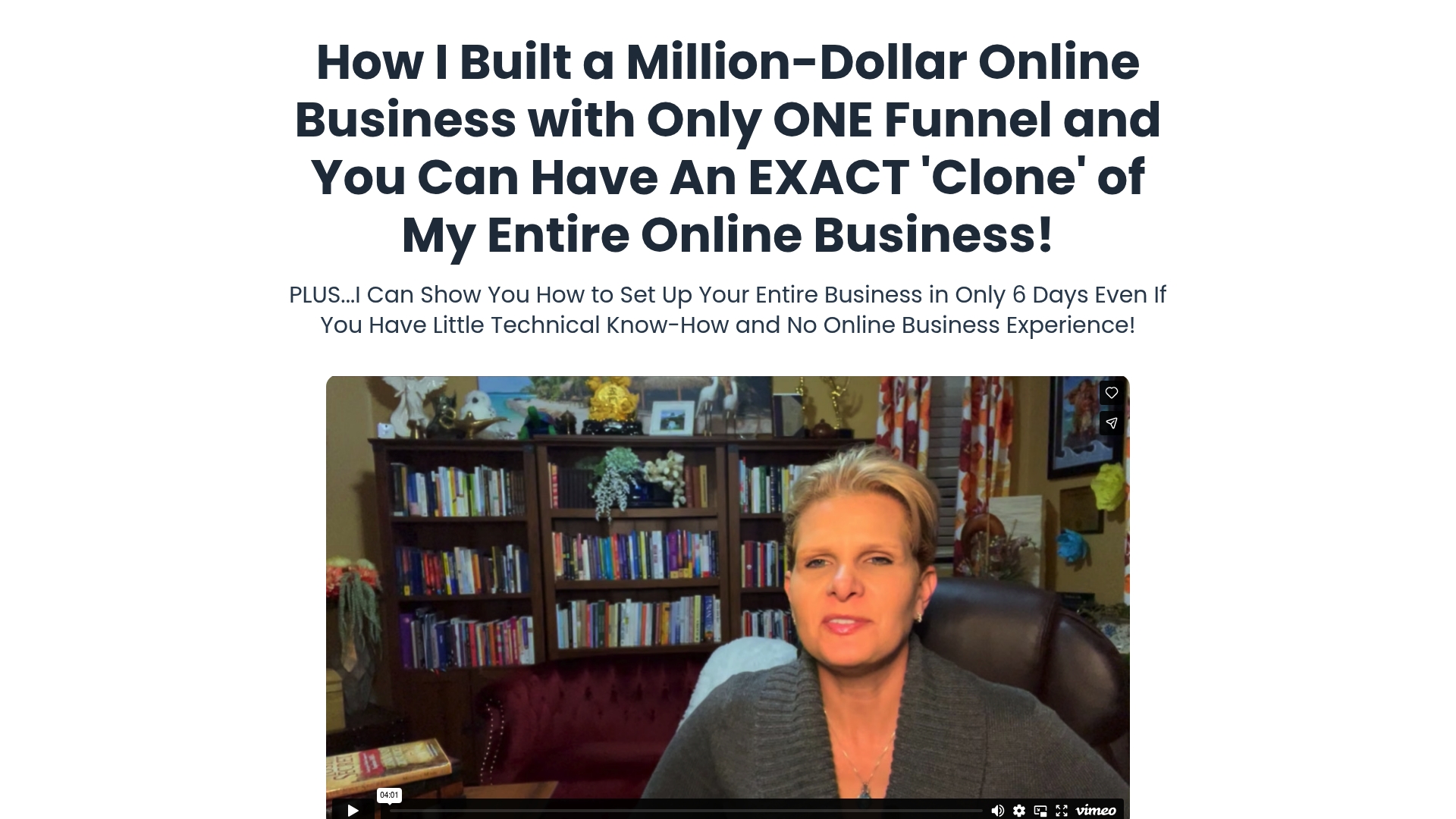
Moneyfunnel does not guarantee earnings and provides educational content only. Results depend on individual effort and execution.
FAQ
What are the main types of online income streams?
The four main types are service-based, content-based, product-based, and remote employment. Each model differs in how money flows, how quickly income starts, and how much it can scale.
Which online income stream is best for beginners?
Service-based income is the fastest starting point for most beginners because it requires only a marketable skill and a platform like Upwork or Fiverr. Income can arrive within days of landing a first client.
How do I report online income on my taxes?
US freelancers and self-employed earners must report business income on Schedule C and pay self-employment tax via Schedule SE when net earnings exceed $400. Setting up monthly bookkeeping from the start prevents errors at filing time.
How do I avoid online income scams?
Verify any platform or promoter through Investor.gov before investing money, and treat any promise of guaranteed returns as a red flag. Investment scams cost Americans over $7.9 billion in 2025 alone.
Can I run multiple online income streams at once?
Yes, and most experienced online earners do. The key is stabilizing one stream first before adding a second, since splitting focus too early reduces results across both models.