
A business model funnel is a visual and strategic representation of the customer journey, mapping every step from first awareness to post-purchase loyalty. Explaining business model funnels clearly is the foundation of any effective online revenue strategy. The industry standard term is "marketing funnel," though you'll also hear "sales funnel" depending on context. Platforms like Shopify and Salesforce use this framework to help businesses understand where customers come from, where they drop off, and how to convert more of them at every stage. If you're building an online business in 2026, understanding this model is not optional.
What are business model funnels and why do they matter?
A marketing funnel visually represents the customer journey through four core stages: awareness, consideration, conversion, and loyalty. These stages are often labeled TOFU (top of funnel), MOFU (middle of funnel), and BOFU (bottom of funnel), with loyalty added as a post-purchase phase. The funnel shape itself tells the story. You start with a large pool of potential customers at the top and narrow down to the smaller group who actually buy.
Modeling customer journeys this way gives you a clear picture of where your marketing efforts are working and where they're failing. Without a funnel model, you're guessing. With one, you're diagnosing. Coursera frames funnel stages as progressive buyer commitments, where the marketer's job shifts from telling to facilitating to nurturing. That framing is more useful than thinking of a funnel as just a sales tool.

What are the stages of a business funnel and their buyer mindsets?
Each funnel stage corresponds to a distinct buyer mindset, and your marketing must match that mindset to move people forward. Misaligning content with stage is the most common funnel mistake entrepreneurs make.
| Funnel Stage | Buyer Mindset | Marketing Goal | Example Content |
|---|---|---|---|
| Awareness (TOFU) | "I have a problem" | Reach and educate | Blog posts, social ads, YouTube videos |
| Consideration (MOFU) | "What are my options?" | Engage and compare | Case studies, webinars, email sequences |
| Conversion (BOFU) | "Should I buy this?" | Remove friction | Free trials, demos, limited offers |
| Loyalty (Post-purchase) | "Was this worth it?" | Retain and upsell | Onboarding, loyalty programs, referrals |
At the awareness stage, buyers don't know you exist. Your job is reach, not selling. At the consideration stage, buyer mindset shifts from passive to active research, so your content should answer specific questions rather than broadcast general messages. At conversion, friction is the enemy. Slow pages, confusing checkout flows, and unclear pricing all kill deals that were already close to closing.
The loyalty stage is where most entrepreneurs leave money on the table. Retaining an existing customer costs far less than acquiring a new one, and a loyal customer who refers others is the most efficient growth engine you can build.
Pro Tip: Map your existing content to each funnel stage before creating anything new. You'll almost always find you have too much awareness content and almost nothing at the conversion stage.
How do business funnels differ between b2b and b2c?

B2B and B2C funnels share the same basic structure but operate very differently in practice. B2B funnels involve longer sales cycles and multiple stakeholders, which means the consideration stage alone can last weeks or months. A B2C buyer might move from awareness to purchase in minutes. A B2B buyer might require six touchpoints across three departments before a contract is signed.
The key structural difference is where marketing ends and sales begins. In B2C, marketing often owns the entire funnel through to purchase. In B2B, marketing owns the early stages and then hands off to a sales team for deal-specific closing. Blurred boundaries between these roles are one of the most common reasons B2B funnels underperform.
Here are the most important adaptations to make when building a B2B funnel:
- Add an intent stage. B2B buyers signal purchase intent through specific behaviors like downloading a pricing guide or requesting a demo. Track these signals explicitly.
- Build multi-stakeholder content. A CFO and a department manager have different questions. Your funnel needs content that speaks to both.
- Define your marketing-qualified lead (MQL) criteria clearly. Without a shared definition between marketing and sales, handoffs break down.
- Extend your nurture sequences. B2B buyers go cold between touchpoints. Automated email sequences keep your brand present without requiring manual follow-up.
- Align messaging by role, not just by stage. The same funnel stage requires different messaging for a technical buyer versus a budget holder.
For B2C entrepreneurs, the funnel is faster but more competitive. The awareness stage is crowded, and the conversion stage is where small UX improvements create outsized revenue gains.
What is funnel analysis and how does it optimize your results?
Funnel analysis is the practice of measuring conversion and drop-off rates at each step of the funnel to identify where users abandon the process. It turns your funnel from a theory into a diagnostic tool. Without funnel analysis, you're optimizing blind.
The core metric is drop-off rate: the percentage of users who enter a step but don't complete it. Average e-commerce cart abandonment sits near 70%. That number means roughly 7 out of every 10 shoppers who add an item to their cart never complete the purchase. Knowing that benchmark helps you set realistic expectations and identify when your own numbers are worse than average.
Three metrics define funnel analysis:
- Step drop-off rate: Users who leave at a specific step divided by users who entered that step.
- Cumulative completion rate: The percentage of users who have completed all steps up to a given point.
- Overall funnel conversion rate: The percentage of users who enter the funnel at step one and complete the final step.
One measurement decision that most entrepreneurs overlook is whether to use an open or closed funnel approach. A closed funnel counts only users who start at step one. An open funnel counts users who enter at any step. The choice changes your conversion numbers significantly and must be standardized before you compare results over time.
Optimizing the biggest drop-off step delivers more ROI than fixing later stages. A 10% improvement at the top of the funnel compounds through every stage below it. A 10% improvement at checkout only affects buyers who were already nearly converted. Start where the leak is largest.
Pro Tip: Always contextualize drop-off rates by traffic source and device. Mobile users abandon carts at higher rates than desktop users. Mixing those numbers together hides the real problem.
How do you create an effective business model funnel?
Building a funnel that converts requires a clear sequence of decisions, not just a diagram on a whiteboard. Mapping the customer journey into funnel stages is the first step, and it forces you to think from the buyer's perspective rather than your own.
Follow these steps to build a funnel that works:
- Define your customer journey. Interview real customers or analyze existing data to understand how buyers discover, evaluate, and decide on your product.
- Assign funnel stages to journey phases. Match awareness, consideration, conversion, and loyalty to the specific moments in your customer's experience.
- Create stage-specific content and offers. A blog post works at awareness. A comparison guide works at consideration. A free trial works at conversion. Each stage needs its own asset.
- Set up tracking for every stage. Use tools like Google Analytics 4, Pipedrive, or Shopify's analytics to measure entry, progression, and drop-off at each step.
- Align your marketing and sales teams. Define who owns each stage, what a qualified lead looks like, and when the handoff happens.
- Test one variable at a time. Change your headline, your offer, or your call to action. Never change multiple elements simultaneously or you won't know what moved the needle.
- Review and revise monthly. Funnels are not set-and-forget systems. Effective funnels answer buyer questions at each stage, and those questions evolve as your market changes.
For a practical walkthrough of each step, the fast-track funnel guide at Moneyfunnel covers the build process in detail. Pipedrive also offers strong native tools for visualizing deal-stage progression, especially for B2B funnels where pipeline management matters.
The most common mistake is building the funnel around your product features rather than your buyer's questions. A funnel built on buyer psychology converts. A funnel built on product specs educates but rarely sells. For a deeper look at how psychology shapes funnel design, the buyer psychology guide at Moneyfunnel is worth your time.
Key takeaways
A business model funnel converts more customers when each stage is built around buyer mindset, measured with consistent metrics, and optimized starting from the largest drop-off point.
| Point | Details |
|---|---|
| Funnel stages map buyer mindset | Match your content to awareness, consideration, conversion, and loyalty stages to move buyers forward. |
| B2B funnels need clear handoffs | Define MQL criteria and role boundaries between marketing and sales to prevent conversion losses. |
| Funnel analysis starts with drop-off | Identify the step with the highest abandonment rate and fix it before optimizing later stages. |
| Measurement method changes results | Standardize open or closed funnel definitions before comparing conversion metrics over time. |
| Build funnels around buyer questions | Funnels that answer questions at each stage outperform funnels that push product messaging. |
What i've learned after years of building funnels
Most entrepreneurs obsess over funnel volume. They want more traffic, more leads, more eyeballs. The shape of the funnel matters far more than the volume going into it. A funnel that converts 3% of 10,000 visitors outperforms one that converts 1% of 50,000. Fix the shape first, then scale the volume.
The second thing I'd push back on is the popular idea that funnels and pipelines are interchangeable terms. They're not. Funnels measure aggregate conversion rates across a population of users. Pipelines track individual deal progress. Mixing those two data sets leads to forecasting errors that can sink a business plan. Keep them separate and you'll make better decisions with both.
The marketing-to-sales handoff is where I've seen the most damage in real businesses. Marketing sends over leads that sales considers unqualified. Sales ignores them. Marketing blames sales. The fix is a shared definition of what a qualified lead looks like, written down and agreed upon before the funnel goes live.
Finally, funnels are living systems. The funnel that worked in 2023 may not work in 2026 because buyer behavior, platform algorithms, and competitive dynamics all shift. Build in a monthly review cadence from day one and treat every funnel as a hypothesis, not a finished product.
— Mike
Ready to build your first high-converting funnel?
Understanding the theory of business model funnels is one thing. Building one that actually generates revenue is another. Moneyfunnel's 6-Day Money Funnel Mentorship is designed for entrepreneurs and marketers who want to move from concept to live funnel fast, with expert guidance at every step.
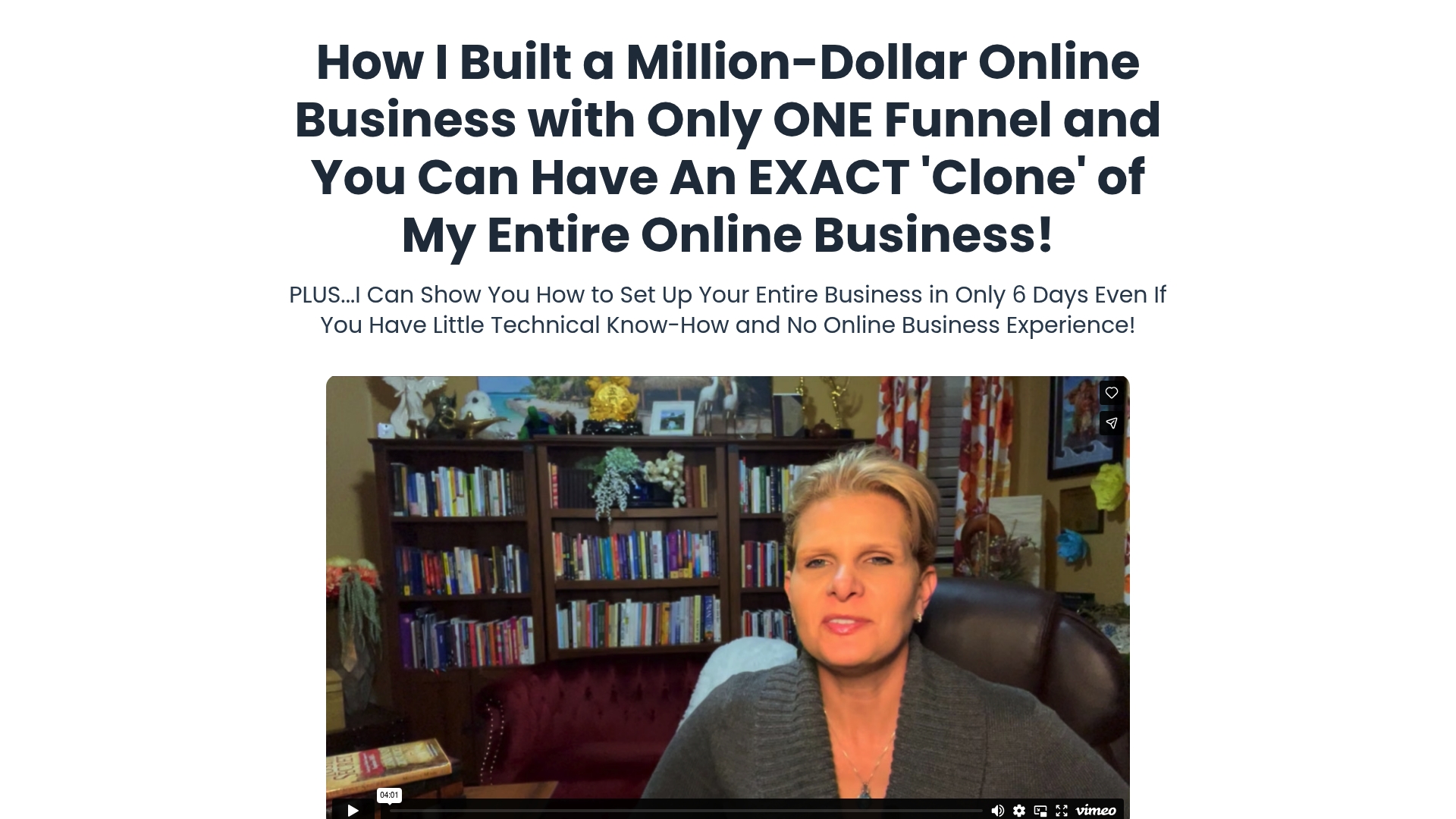
The program covers funnel strategy, customer journey modeling, content creation by stage, and conversion optimization, all within six structured days. Moneyfunnel's creator built a single funnel that generated $10 million in revenue. The mentorship program teaches the same system, adapted for your business model and goals. Spots are limited. If you're serious about building online revenue, this is the most direct path from learning to earning.
FAQ
What is a business model funnel?
A business model funnel is a visual framework that maps the customer journey from initial awareness through to purchase and loyalty. It typically includes TOFU, MOFU, and BOFU stages, each representing a different buyer mindset and marketing goal.
How does a sales funnel differ from a marketing funnel?
A marketing funnel covers the full buyer journey from awareness to loyalty, while a sales funnel focuses on the later stages of conversion and deal closing. In B2B contexts, marketing owns the top of the funnel and sales owns the bottom.
What is a good funnel conversion rate?
There is no universal benchmark. Average e-commerce cart abandonment sits near 70%, meaning most funnels lose the majority of users before purchase. Conversion rates vary significantly by industry, traffic source, and device type.
How do i identify where my funnel is leaking?
Use funnel analysis to calculate the drop-off rate at each step. The step with the highest drop-off rate is your biggest leak. Fixing that step delivers more total conversion improvement than optimizing any later stage.
What tools help build and track a business funnel?
Pipedrive supports B2B funnel and pipeline management. Shopify includes built-in funnel analytics for e-commerce. Google Analytics 4 tracks multi-step user journeys across any website. Each tool serves a different funnel context and business model.