
Most people assume mentorship means getting general advice from someone who's been around the block. That's not what online business mentorship actually is. What is online business mentorship at its core? It's a sustained, structured relationship where an experienced entrepreneur helps you develop the judgment to make better decisions, not just the knowledge to sound informed. If you're new to building an online business and you've been wondering whether a mentor is worth your time, this article breaks down exactly what to expect, what the research says, and how to find the right fit.
Table of Contents
- Key takeaways
- What online business mentorship actually is
- How structured online mentorship programs work
- The real benefits of business mentorship
- How to find the right business mentor online
- My take on mentorship after years in online business
- Ready to experience structured mentorship firsthand?
- FAQ
Key takeaways
| Point | Details |
|---|---|
| Mentorship vs. coaching | Mentorship is an ongoing relationship focused on judgment; coaching is typically short-term and task-specific. |
| Programs have real structure | Effective online mentorship matches you to a mentor, sets session formats, and tracks progress with follow-ups. |
| Financial results are documented | Research shows 65% of business leaders report revenue growth directly tied to mentoring relationships. |
| The right mentor match matters | Aligning your mentor's experience to your specific decisions is more important than general credentials. |
| Relationship quality drives outcomes | Technology alone doesn't make mentorship work. Consistent engagement and communication rituals do. |
What online business mentorship actually is
A lot of first-time entrepreneurs confuse mentorship with consulting or coaching. They're not the same thing, and mixing them up leads to disappointment.
A consultant comes in, solves a specific problem, hands you a deliverable, and leaves. A coach focuses on your performance over a defined period, often around habits, mindset, or skill development. Online business mentorship, by contrast, is an ongoing guidance relationship built around how you think and decide, not just what you do. The mentor's job isn't to manage your business for you. It's to sharpen the instincts you'll use to manage it yourself.
Here's a simple breakdown of how these three roles differ:
| Type | Primary focus | Duration | Output |
|---|---|---|---|
| Consultant | Solving a specific problem | Short-term project | Report, deliverable |
| Coach | Skill or performance improvement | Fixed engagement | Behavior change |
| Mentor | Judgment and decision-making | Long-term relationship | Better founder instincts |
In practice, online business mentorship happens through video calls, email exchanges, and shared documents. You meet regularly, usually every two to four weeks, and you work through real decisions you're facing right now. Pricing a new offer. Choosing between two marketing channels. Deciding whether to hire your first contractor. Your mentor doesn't answer those questions for you. They help you think through them more clearly.
Pro Tip: Look for a mentor who asks you more questions than they answer. The best mentors don't tell you what to do. They help you figure out why you're struggling to decide.
How structured online mentorship programs work
Virtual business mentorship programs aren't just informal arrangements where two people hop on a video call and chat. The ones that deliver results are built with deliberate structure.
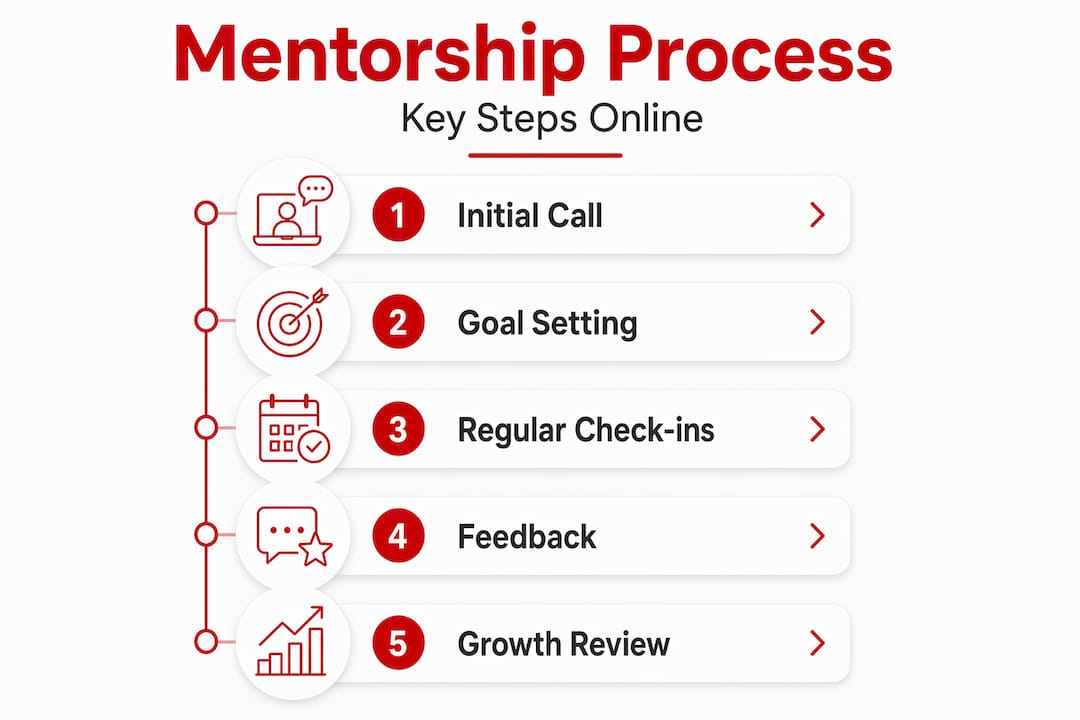
A well-designed program typically follows these steps:
- Clarify your objectives upfront. Before any matching happens, you articulate your current business situation, your biggest challenges, and what kind of decisions you need support on most. This isn't a formality. It's the foundation the entire relationship is built on.
- Match based on relevant experience. You're paired with a mentor whose background aligns with your specific business challenges. If you're launching a digital product, your mentor should have direct experience with that, not just general business success.
- Agree on session frequency and format. Most programs establish a meeting cadence, usually monthly or bi-weekly, with video calls as the primary format. Some also use structured email check-ins between sessions.
- Set clear action items after each session. Follow-ups after sessions are what separate real progress from pleasant conversation. Each meeting should end with two or three specific things you're going to do before you meet again.
- Track progress over time. Effective programs include some form of accountability mechanism, whether that's a shared document, a progress review at the 90-day mark, or a formal feedback loop built into the platform.
The technology side matters less than most people think. A study on virtual mentorship found that online mentoring fails when the relational engagement is weak, even when the technology works perfectly. Zoom isn't the product. The relationship is. Programs that treat technology and communication as a coordinated system, not just a meeting tool, consistently produce better results.
Pro Tip: Before you enroll in any virtual mentorship program, ask how they handle accountability between sessions. If they don't have a clear answer, the program likely lacks the structure you need to see real progress.
The real benefits of business mentorship
Here's where things get concrete. The benefits of business mentorship aren't just about having someone to talk to when you're stressed. The data is specific.
Research from the Association of Business Mentors found that 65% of business leaders said mentorship boosted their revenues, while 64% reported improved profits. Those aren't soft outcomes. That's the kind of return that makes mentorship one of the highest-leverage investments an entrepreneur can make.
"7 out of 10 mentored business leaders report improved mental health, better confidence, and stronger work-life balance." — ABM Research on Business Mentoring
But the financial results only tell part of the story. The personal outcomes are equally significant, especially for new entrepreneurs who are often isolated and second-guessing every decision. Mentors provide perspective, accountability, and emotional support that's hard to get anywhere else. They help you slow down before making a costly mistake. They remind you that what you're experiencing is normal. They've seen the same traps and can tell you which ones to actually worry about.
For aspiring entrepreneurs specifically, the benefits of mentorship for entrepreneurs include:
- Faster learning curves. You skip the most common early mistakes because your mentor has already made them.
- Better decision quality. Instead of guessing, you get a thinking partner who challenges your assumptions before you commit.
- Reduced isolation. Entrepreneurship is lonely. A good mentor gives you someone in your corner who actually understands the pressure.
- Increased confidence. Knowing your thinking has been pressure-tested by someone with real experience changes how you act on your decisions.
Mentorship also transfers something that no course or book can replicate: the experiential knowledge built through real setbacks and recoveries. That's the invisible asset a great mentor brings to every session.
How to find the right business mentor online

Finding a mentor is easier than it's ever been. Finding the right one takes more thought.
Start with these criteria before you start searching:
- Match the mentor's experience to your actual decisions. If your biggest challenge is choosing a traffic source, a mentor who built a product company through wholesale distribution isn't a great fit. The specificity of the match determines how useful the advice will be.
- Evaluate their mentoring style, not just their resume. A former CEO with impressive credentials can be a poor mentor if they're prescriptive rather than curious. Ask potential mentors how they typically work with mentees, and listen for whether they talk more or ask more.
- Consider logistics honestly. Time zones, session frequency, and your own schedule matter. A mentor who's theoretically perfect but impossible to reach consistently is not a mentor in practice.
- Look for structured programs over informal arrangements. Programs with clear matching processes, defined session formats, and accountability systems deliver more consistent results than purely informal relationships.
For accessible starting points, SCORE is the nation's largest volunteer business mentor network, offering free online mentoring via email, phone, and video. It's a strong option if you're early-stage and not yet ready to invest in a paid program. Specialized platforms focused on online business and digital entrepreneurship go deeper on niche-specific challenges.
One thing to avoid: choosing a mentor based on how impressive their story sounds rather than how relevant their experience is to your situation. An entrepreneur who built a profitable online business model in your specific space is worth more to you than a famous founder whose path has nothing to do with yours.
Pro Tip: Before your first session with any mentor, write down the three decisions you need to make in the next 30 days. Bring them to the first call. How your mentor engages with those specific problems will tell you immediately whether the relationship will work.
My take on mentorship after years in online business
I've worked with a lot of entrepreneurs at different stages, and the pattern I see most often isn't that people lack the right mentor. It's that they don't know what to use a mentor for.
People come into mentorship wanting someone to tell them what to do. That's the wrong mindset entirely. The best mentorship I've experienced, and the most effective relationships I've watched develop, happen when the mentee brings a specific decision to the table and asks, "How would you think about this?" Not "What should I do?" That distinction changes everything.
The other mistake I see constantly: people treat the sessions as the product. They show up, have a good conversation, feel energized, and then don't follow through. Mentoring outcomes are both financial and personal, but you only unlock them through consistent action between sessions, not during them.
What I've found is that mentorship builds something harder to measure but more valuable than any single piece of advice: it matures your instincts. After enough sessions with the right person, you start catching your own thinking errors before you commit to them. That compounding effect is the real return on mentorship. And it's one of the strongest reasons I believe structured programs outperform informal arrangements for people who are just getting started. If you want to explore what that looks like in practice, the overview of mentorship and business success metrics is worth your time.
— Mike
Ready to experience structured mentorship firsthand?
If this article has clarified what online business mentorship actually is, the next step is experiencing it in a format built for online entrepreneurs specifically.
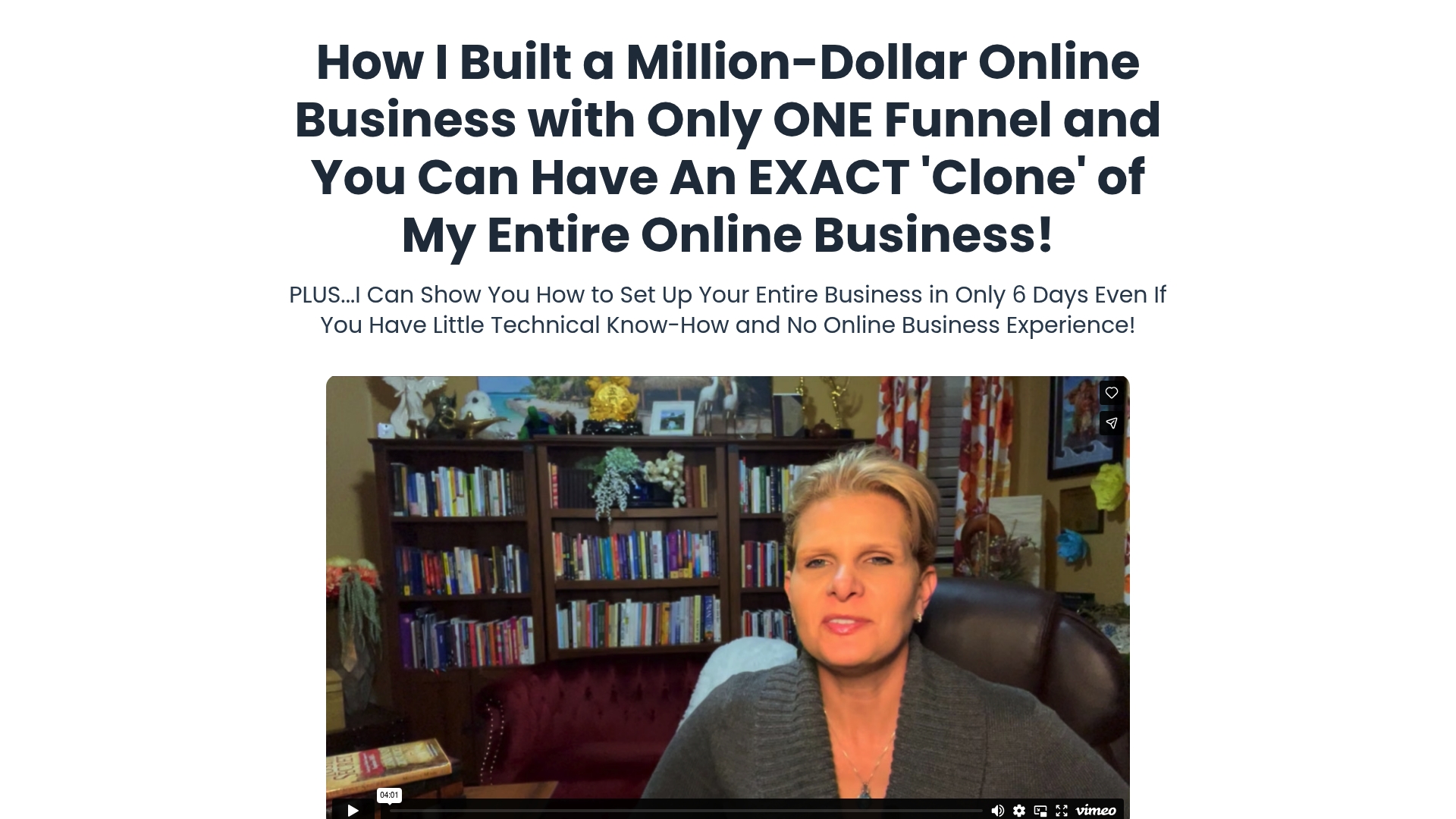
Moneyfunnel's 6-day mentorship program was designed for aspiring entrepreneurs who want guided, step-by-step support to build and launch a sales funnel-based online business. The program is structured around the same principles covered in this article: clear objectives, relevant experience, session accountability, and real decision support. It doesn't require technical skills, and it's built for people who are starting from scratch or haven't yet gained traction. The creator built a $10 million business with a single funnel and walks you through the same framework. Spots are limited to maintain the quality of the group mentorship experience. If you're serious about applying what you've learned here, this is a practical and concrete place to start. You can also explore practical online business ideas for 2026 to think through what kind of business you'd want mentorship support on before you enroll.
FAQ
What is online business mentorship in simple terms?
Online business mentorship is a structured, ongoing relationship where an experienced entrepreneur guides you through decisions, challenges, and growth over time. It happens remotely via video calls, emails, and shared tools.
How is mentorship different from online business coaching?
Mentorship focuses on long-term judgment and decision-making support, while coaching is typically short-term and skill or performance-focused. A mentor draws on lived experience; a coach applies structured methods.
How long does a typical online mentorship relationship last?
Most formal mentorship relationships run for six months to a year, with regular sessions every two to four weeks. Some programs, like Moneyfunnel's six-day program, offer intensive formats for faster results.
Is free business mentorship actually useful?
Yes. Organizations like SCORE offer free online mentoring from experienced volunteers and deliver real value, especially for early-stage entrepreneurs. The quality depends more on mentor fit than cost.
What do business mentors do in a typical session?
Business mentors review your current challenges, ask clarifying questions, help you pressure-test your thinking, and close with specific action items. They focus on your decision-making process, not just your outcomes.